Welding Thin Sheet Metal: How to Avoid Burn-Through and Warping
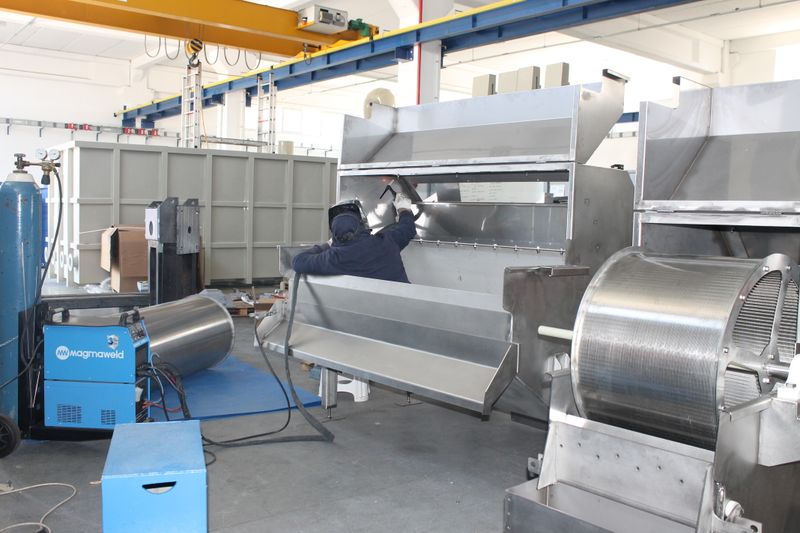
Welding thin sheet metal — anything from 26-gauge auto body panels up to about 16-gauge — is one of the most challenging skills in fabrication. The metal is unforgiving: too much heat and you blow a hole, too little and you get incomplete fusion. Add in the tendency for thin metal to warp and distort, and you have a process that demands precision, patience, and the right technique.
Whether you are restoring a classic car, fabricating ductwork, or building custom enclosures, this guide will help you produce clean, flat welds on thin sheet metal.
Why Thin Metal Is Difficult to Weld
Thin sheet metal presents two primary challenges:
- Low heat capacity — The metal absorbs very little heat before reaching melting temperature, giving you an extremely narrow window between a good weld and a hole.
- High distortion susceptibility — Thin metal has little structural rigidity to resist the shrinkage forces that welding introduces, leading to warping, buckling, and oil-canning.
Understanding these challenges is the foundation for everything else. Every technique described below is designed to address one or both of these issues.
Choosing the Right Process
MIG Welding (GMAW) — Most Common Choice
MIG is the most popular process for thin sheet metal because it is fast, relatively easy to control, and works well with short-circuit transfer mode, which produces a relatively cool arc ideal for thin material.
MIG settings for thin metal (18-gauge mild steel as an example):
- Wire diameter: 0.023 inch (0.6 mm) or 0.030 inch (0.8 mm)
- Wire type: ER70S-6
- Shielding gas: 75% argon / 25% CO₂ at 20–25 CFH
- Voltage: 14–16 volts (for short-circuit transfer)
- Wire feed speed: 150–250 IPM (varies by machine)
Use the thinnest wire you can. A 0.023-inch wire deposits less metal per unit of time than 0.030-inch, giving you finer control over heat input.
TIG Welding (GTAW) — Best for Precision
TIG offers the ultimate control for thin metal because you can independently adjust the amperage with a foot pedal or fingertip control. This makes it possible to ease off the heat instantly when you see the puddle getting too large.
TIG settings for thin metal (18-gauge mild steel):
- Tungsten: 1/16-inch or 3/32-inch, sharpened to a fine point
- Filler rod: 1/16-inch ER70S-2
- Amperage: 40–80 amps (adjust with pedal)
- Shielding gas: 100% argon at 15–20 CFH
- Polarity: DCEN
Resistance Spot Welding — OEM Approach
For lap joints on auto body panels, resistance spot welding is how the factory does it, and it is worth considering for restorations. A portable spot welder produces strong joints with minimal heat distortion.
Essential Techniques for Preventing Burn-Through
1. Use Stitch (Tack) Welding Instead of Continuous Beads
The single most important technique for thin metal is to avoid long continuous welds. Instead, place small tack welds or short stitch welds (approximately 1/2 to 3/4 inch long) spaced along the joint.
After placing a stitch on one section, move to a different area of the joint to let the first section cool. This distributes heat and prevents localized overheating.
2. Control Your Travel Speed
On thin metal, you need to move faster than on thick plate. A travel speed that feels “too fast” is often just right for sheet metal. If you linger even slightly, you will blow through.
Practice on scrap of the same gauge to calibrate your speed before welding on your actual workpiece.
3. Use a Push Angle
When MIG welding thin metal, use a push angle (the gun pointing in the direction of travel) of about 10–15 degrees. The push angle spreads the arc over a wider area, reducing penetration compared to the drag angle.
4. Adjust Your Stick-Out
A longer contact tip to work distance (stick-out) of about 3/8 to 1/2 inch reduces the amperage slightly at the arc, which can help prevent burn-through on very thin material. Do not extend it so far that you lose arc stability.
5. Use Backing Materials
When welding extremely thin metal or when burn-through is a persistent problem, place a copper or aluminum backing bar behind the joint. These materials draw heat away from the weld zone and provide a surface that the weld pool cannot stick to.
Copper welding backing bars are inexpensive and reusable, making them a worthwhile addition to your thin-metal toolkit.
6. Skip the Filler on Very Thin Joints
On material thinner than 20-gauge, you can sometimes autogenous weld (no filler) by TIG, simply fusing the two pieces together. This eliminates the additional heat input from melting filler rod. Only use this technique on joints with tight fit-up — any gap will result in a hole.
Techniques for Preventing Warping and Distortion
Fit-Up Is Everything
On thin metal, gaps are your enemy. A gap means you need more filler metal and more heat to bridge it, which means more distortion. Fit your joints as tight as possible — ideally with zero gap.
Use clamps, Cleco fasteners, or sheet metal screws to hold the joint tightly together while welding. Cleco pliers and fasteners, borrowed from aviation fabrication, are outstanding for auto body work.
Sequence Your Welds Strategically
Never weld continuously along a seam on thin metal. Use one of these strategies:
- Backstep technique — Weld short stitches in the reverse direction of your overall progress. Each stitch overlaps the previous one slightly.
- Skip welding — Place stitches at widely spaced intervals, then fill in between them after the first stitches have cooled.
- Alternating sides — If welding a seam that has two sides (like a box joint), alternate between sides to balance the shrinkage forces.
Clamp Generously
Use as many clamps as you can fit. C-clamps, locking pliers, and specialized sheet metal clamps all work. The goal is to hold the metal flat and prevent it from bowing as heat is applied.
Planish After Welding
If you do get some distortion, use a hammer and dolly to planish (flatten) the weld area while it is still warm. The metal is more malleable when warm, making it easier to restore the original shape. This is a standard technique in auto body restoration.
Common Mistakes to Avoid
Using Too Thick a Wire or Rod
On 20-gauge metal, a 0.035-inch MIG wire deposits too much metal too quickly. Switch to 0.023 or 0.030 inch. Similarly, for TIG, use a 1/16-inch filler rod instead of 3/32.
Grinding Too Aggressively
Thin metal is easy to grind through. Use a flap disc instead of a hard grinding wheel, and use light pressure. Your goal is to smooth the weld flush with the surrounding metal, not remove material.
Ignoring Fit-Up
Spending 30 extra minutes on fit-up saves hours of fixing burn-through and distortion. Take the time to get the joint tight and properly clamped before striking an arc.
Welding Over Paint, Rust, or Coatings
Thin metal amplifies the problems of contaminated welds. Clean both sides of the joint to bare metal with a grinder or sander before welding. Any coating will cause porosity, require more heat to penetrate, and may release toxic fumes.
Not Using a Heat Sink
For small parts or isolated areas, simply clamping a thick piece of aluminum or copper to the back of the workpiece absorbs enough heat to prevent warping. This simple trick is often overlooked.
MIG Welder Setup Tips for Thin Metal
If your MIG welder has adjustable inductance, increase the inductance setting. Higher inductance produces a softer, less aggressive arc with a wider penetration profile — ideal for thin metal.
Some welders also have a dedicated “thin metal” or “sheet metal” mode that pulses the arc, alternating between a peak current and a background current. This reduces overall heat input while maintaining arc stability. If your machine has this feature, learn to use it.
A quality MIG welder with synergic control can automatically set wire feed speed and voltage based on material thickness, taking much of the guesswork out of thin metal welding.
Key Takeaways
Successful thin sheet metal welding comes down to minimizing heat input and distributing what heat you do apply. Use the thinnest wire or rod possible, weld in short stitches rather than continuous beads, clamp everything tight, and move around the joint to let each section cool. With practice and patience, you can produce clean, flat welds on even the thinnest gauge sheet metal.
Related Articles
Machine setup has an outsized effect on thin metal results — the how to set up a MIG welder guide walks through voltage, wire feed speed, and inductance settings at the thin end of the material range where dial-in is most critical. Thin stainless sheet presents the combined challenges of heat sensitivity and contamination risk — the welding stainless steel guide covers the techniques for managing both on the same material. Defects like burn-through and porosity are particularly common when learning thin metal welding — the common welding defects and how to fix them guide helps you diagnose what is going wrong and correct it.

The Welder's Guide Editorial Team
Independent trade-focused editorial team