Welding Stainless Steel: Techniques and Tips
Quick answer
Stainless welding is about controlling heat, cleanliness, filler choice, and shielding so corrosion resistance is preserved. Overheating, carbon contamination, and poor purge practice can create welds that look acceptable but corrode early.
Common questions
- Why does stainless warp so easily?
- Stainless has lower thermal conductivity than mild steel, so heat stays concentrated near the weld. Smaller beads, good fit-up, sequencing, and heat control help limit distortion.
- Why is cleanliness critical on stainless?
- Carbon steel contamination can create rust points and reduce corrosion resistance. Use clean brushes, abrasives, filler, and work surfaces dedicated to stainless when possible.
Source note: Reviewed July 2026 against the article guidance and common welding safety practice; material specifications, procedure requirements, and shop safety rules control final settings.
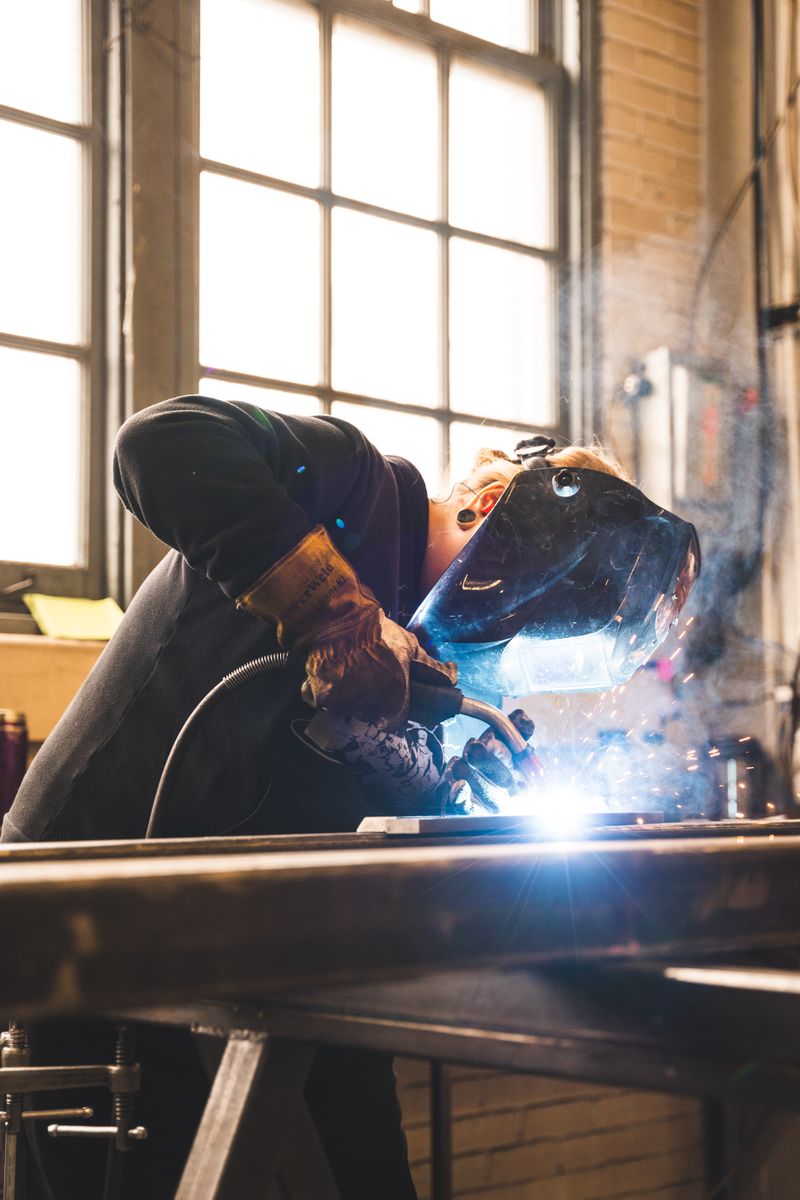
Welding stainless steel can be one of the most rewarding processes in a fabricator’s repertoire, but it also demands a higher level of skill and attention to detail than welding mild steel. Stainless steel’s unique properties — its chromium content, low thermal conductivity, and high coefficient of thermal expansion — mean that the same habits you use on carbon steel can lead to warping, sugaring, or corrosion if you are not careful.
This guide covers everything you need to know to produce clean, corrosion-resistant stainless welds, whether you are working on food-grade piping, architectural railings, or exhaust systems.
Why Stainless Steel Is Different
Stainless steel contains a minimum of 10.5% chromium, which forms a self-healing passive oxide layer on the surface. This is what gives the material its corrosion resistance. However, that protective layer can be destroyed during welding if you expose the material to excessive heat or contamination.
Key challenges when welding stainless include:
- Low thermal conductivity — Heat stays concentrated in the weld zone instead of dispersing, increasing the risk of distortion and carbide precipitation.
- High thermal expansion — The metal expands more than carbon steel during heating, which means greater warping potential.
- Sensitivity to contamination — Sulfur, carbon, and even trace amounts of mild steel on your tools can compromise the chromium oxide layer and cause rust.
Understanding these characteristics is the first step toward producing sound welds.
Choosing the Right Process
TIG Welding (GTAW)
TIG welding is the gold standard for stainless steel, especially for thinner materials and applications where appearance matters. It gives you precise control over heat input and produces exceptionally clean welds with no spatter.
When to use TIG for stainless:
- Sheet metal and thin-wall tubing (up to about 3/16 inch)
- Food-grade or pharmaceutical piping
- Architectural work where the weld bead will be visible
- Root passes on pipe welds
Use DCEN (direct current electrode negative) with a sharp tungsten electrode. A 2% lanthanated or thoriated tungsten works well. Keep the tungsten clean and contaminate-free between uses.
MIG Welding (GMAW)
MIG welding stainless is faster and more productive for heavier sections, shop fabrication, and when aesthetics are less critical. You will need a shielding gas blend designed for stainless — typically a tri-mix of helium, argon, and CO₂.
When to use MIG for stainless:
- Structural applications with material 1/8 inch or thicker
- High-production shop work
- Situations where speed is more important than bead appearance
Consider using a spool gun or a dedicated liner to prevent wire feed issues, since stainless MIG wire is softer than mild steel wire.
Filler Metal Selection
Matching your filler metal to your base metal is critical. Using the wrong filler can result in poor corrosion resistance, cracking, or a weak joint.
| Base Metal | Recommended Filler Metal |
|---|---|
| 304 stainless | ER308L |
| 309 stainless | ER309L (also used for dissimilar joints to carbon steel) |
| 316 stainless | ER316L |
| 347 stainless | ER347 |
The “L” designation indicates low carbon content (0.03% maximum), which reduces the risk of sensitization and intergranular corrosion. Always choose the low-carbon variant when it is available.
Shielding Gas Considerations
For TIG welding stainless steel, use pure argon or an argon/helium blend. A common mix is 75% argon / 25% helium, which provides a hotter arc and better penetration on thicker material.
For MIG welding stainless, the standard recommendation is a tri-mix gas — often 90% helium / 7.5% argon / 2.5% CO₂. The small amount of CO₂ provides arc stability, while the helium delivers the heat input needed for stainless without excessive current.
Do not use the same 75/25 argon/CO₂ mix you use for mild steel. The high CO₂ content will add carbon to the weld pool and can cause carbide precipitation, undermining corrosion resistance.
Back Purging for Full Penetration Welds
When you are welding stainless pipe or tubing with full penetration, the back side of the weld is exposed to atmosphere at elevated temperatures. Without protection, the chromium oxidizes, forming a rough, sugary appearance known as “sugaring” or “strawing.”
Back purging involves flowing argon gas through the inside of the pipe to displace oxygen. This produces a clean, oxide-free root pass on the inside.
Tips for effective back purging:
- Use a flow rate of 5–15 CFH — too much pressure can cause turbulence and draw in atmospheric oxygen
- Seal both ends of the pipe with tape or purge dams
- Allow the purge to run for at least 30 seconds before starting your weld
- Consider soluble purge dams that dissolve in water after welding
If you do a lot of stainless pipe work, invest in an inflatable pipe purging system to save time and gas.
Heat Management Techniques
Controlling heat input is arguably the most important skill in stainless steel welding. Excessive heat causes three major problems: warping, carbide precipitation, and loss of corrosion resistance.
Use Stringer Beads
Avoid weaving. Stringer beads keep the heat concentrated and narrow. If you need wider coverage, make multiple stringer passes rather than one wide weave.
Skip Welding
Instead of welding continuously along a seam, skip around. Weld a short section, then move to another area far from the first. This distributes heat evenly and prevents localized overheating.
Keep Interpass Temperature Low
For 300-series stainless, the interpass temperature should generally stay below 350°F (175°C). Use a temperature-indicating crayon or a digital infrared thermometer to monitor the metal between passes.
Copper Backing Bars
Placing a copper backing bar behind the weld joint draws heat away from the stainless, reducing distortion and preventing burn-through on thin material. Just make sure the copper does not contact the weld pool directly, as copper contamination can cause cracking.
Preventing Common Defects
Carbide Precipitation (Sensitization)
When stainless steel is held in the 800–1600°F range for too long, chromium carbides form at the grain boundaries. This depletes the surrounding area of chromium, making it susceptible to intergranular corrosion. The solution is to minimize heat input and use low-carbon (L-grade) filler metals.
Warping and Distortion
Stainless expands roughly 50% more than carbon steel when heated. Use clamps, fixtures, and tack welds generously. Plan your weld sequence to balance shrinkage forces across the joint.
Contamination
Never use grinding wheels, wire brushes, or hand tools that have been used on carbon steel. Keep a dedicated set of stainless-only abrasives and tools. Even small amounts of embedded iron particles will rust and stain the surface.
Post-Weld Treatment
After welding, clean the weld and heat-affected zone to restore the passive chromium oxide layer.
- Wire brushing — Use a stainless steel wire brush immediately after welding while the metal is still warm.
- Pickling paste — Apply a pickling paste (typically a nitric/hydrofluoric acid blend) to remove oxide scale and discoloration. Always follow the manufacturer’s safety instructions and rinse thoroughly.
- Passivation — A nitric acid passivation treatment removes free iron from the surface and promotes the reformation of the passive layer.
For small projects, a dedicated stainless weld cleaning kit can handle discoloration without the hazards of acid pickling.
Safety Considerations
Stainless steel welding produces hexavalent chromium (Cr VI) fumes, which are a known carcinogen. Always weld in a well-ventilated area or use local exhaust ventilation. A properly fitted respirator with P100 cartridges provides additional protection when welding indoors or in confined spaces.
Wear appropriate PPE including a welding helmet with the correct shade lens, leather gloves, and flame-resistant clothing. The brighter arc from TIG welding on stainless may require a darker shade than you use for mild steel.
Key Takeaways
Welding stainless steel successfully comes down to three fundamentals: controlling heat input, preventing contamination, and using the right filler metal and shielding gas. Master these, and you will produce welds that are both structurally sound and visually impressive. Whether you are a hobbyist building a custom exhaust or a professional fabricating sanitary piping, the principles remain the same. Take your time, plan your sequence, and let the material cool between passes.
Related Articles
Shielding gas selection is critical for stainless — the understanding welding shielding gases guide explains why the standard C25 mix damages stainless welds and what tri-mix and argon/helium blends to use instead. The hexavalent chromium fumes produced by stainless welding require elevated PPE and ventilation measures — the welding safety essentials guide covers respiratory protection requirements and ventilation setups for this hazard. If you are working on thin stainless sheet, many of the same heat management principles apply — the welding thin sheet metal guide covers stitch welding, backing bars, and sequence planning that translates directly to thin-gauge stainless work.

The Welder's Guide Editorial Team
Independent trade-focused editorial team