Understanding Shielding Gases for MIG and TIG Welding
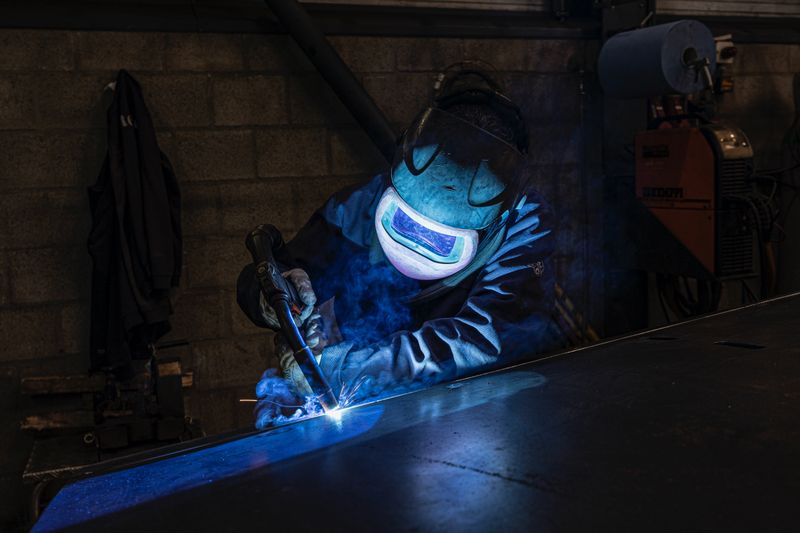
Shielding gas is one of the most misunderstood aspects of welding. Many welders know they need it, use whatever their local supplier recommends, and never think about it again. But the gas flowing through your torch has a profound effect on arc characteristics, penetration profile, spatter levels, bead appearance, and weld quality.
Understanding how different gases and gas blends behave allows you to optimize your welding for any application — from thin auto body panels to heavy structural plate.
Why Shielding Gas Is Necessary
At the temperatures involved in arc welding (5,000–30,000°F), molten metal is highly reactive. If the weld pool is exposed to the atmosphere, oxygen and nitrogen dissolve into the metal, causing:
- Porosity — Gas pockets trapped in the solidified weld
- Oxidation — Weak, brittle oxide inclusions in the weld metal
- Nitrogen embrittlement — Reduced ductility and toughness
- Undercut and poor bead appearance — Contaminated weld surfaces
Shielding gas displaces the atmosphere around the weld pool and arc, providing a protective environment for the molten metal to solidify cleanly.
The Primary Shielding Gases
Argon
Argon is an inert (non-reactive) gas that makes up roughly 1% of the Earth’s atmosphere. It is the backbone of most shielding gas blends.
Properties:
- Chemically inert — does not react with the weld pool
- Heavier than air — provides excellent coverage and resists wind displacement
- Produces a narrow, concentrated arc cone
- Low ionization potential — easy arc starting
- Relatively expensive compared to CO₂
Argon is used pure for TIG welding on all metals and as the primary component in most MIG gas blends.
Carbon Dioxide (CO₂)
CO₂ is the only commonly used shielding gas that is not inert. At arc temperatures, CO₂ dissociates into carbon monoxide and oxygen, making it a reactive (or semi-inert) gas.
Properties:
- Much cheaper than argon
- Provides deep, penetrating arc with broad penetration profile
- Produces more spatter than argon blends
- Can add carbon to the weld pool (a concern for stainless steel)
- Does not support spray transfer mode in MIG welding
CO₂ is commonly used pure for flux-cored welding (FCAW) and as a component in MIG blends for mild steel.
Helium
Helium is an inert gas that is lighter than air and has high thermal conductivity.
Properties:
- Produces a hotter arc than argon at the same amperage
- Wider arc cone with broader penetration profile
- Requires higher flow rates than argon (because it rises and disperses quickly)
- More expensive than argon
- Improves weld pool wetting on aluminum and copper
Helium is used primarily in TIG welding for aluminum and copper alloys, often blended with argon.
Oxygen
Small amounts of oxygen (2–5%) are sometimes added to argon blends for MIG welding mild steel. The oxygen improves arc stability, increases penetration, and promotes spray transfer.
Oxygen should never be used with TIG welding, as it will contaminate the tungsten electrode and oxidize the weld pool.
Shielding Gases for MIG Welding
Mild Steel
C25 (75% Argon / 25% CO₂) — The most popular MIG gas for mild steel in North America. It provides a good balance of arc stability, penetration, spatter control, and bead appearance. Works well in short-circuit and globular transfer modes.
100% CO₂ — The budget option. Provides excellent penetration and is cheap, but produces significantly more spatter, a rougher bead appearance, and does not support spray transfer. Best used with flux-cored wire or for non-cosmetic applications.
90% Argon / 10% CO₂ — A step up from C25 for heavier fabrication. Produces less spatter and supports spray transfer at higher voltages, allowing faster deposition on thicker material.
85% Argon / 15% CO₂ — A versatile middle ground that provides good penetration with acceptable spatter levels for general fabrication.
95% Argon / 5% Oxygen — An older blend still used in some industrial applications. Produces a very stable arc with spray transfer. Not common in small shops.
Stainless Steel
Tri-mix (90% Helium / 7.5% Argon / 2.5% CO₂) — The standard recommendation for MIG welding stainless steel. The helium provides the heat input stainless requires, while the small CO₂ percentage provides arc stability without adding excessive carbon to the weld pool.
98% Argon / 2% Oxygen — Sometimes used for spray transfer on stainless, but the oxygen content requires careful control to avoid carbide precipitation.
Do not use C25 for stainless steel. The high CO₂ content adds carbon to the weld, which can cause sensitization and reduce corrosion resistance.
Aluminum
100% Argon — The standard for MIG welding aluminum. Argon provides excellent cleaning action on the aluminum oxide layer and supports the spray transfer mode required for aluminum MIG.
75% Helium / 25% Argon — Used for thicker aluminum sections (over 1/2 inch) where additional heat input is needed to achieve full penetration.
Shielding Gases for TIG Welding
Mild Steel and Stainless Steel
100% Argon — The universal choice for TIG welding all carbon steels, stainless steels, and most other ferrous metals. Argon provides excellent arc starting, a stable arc, and good puddle control.
75% Argon / 25% Helium — Used for thicker stainless steel sections where additional heat input helps achieve full penetration without excessive amperage.
Aluminum
100% Argon — Works well for aluminum up to about 1/8 inch thickness. Provides good cleaning action and arc stability in AC mode.
50% Argon / 50% Helium or 75% Helium / 25% Argon — Preferred for thicker aluminum (over 1/4 inch). The helium increases heat input, allowing you to weld thicker material at a given amperage. The trade-off is a less stable arc that is harder to start.
Copper and Copper Alloys
75% Helium / 25% Argon — Copper’s extremely high thermal conductivity requires the additional heat that helium provides. Pure argon typically does not provide enough heat input except on very thin copper.
100% Helium — Used for thick copper sections and copper-nickel alloys where maximum heat input is needed.
How Gas Affects MIG Transfer Modes
Your shielding gas choice directly affects which metal transfer mode your MIG welder operates in:
| Transfer Mode | Required Gas | Typical Use |
|---|---|---|
| Short-circuit | C25, CO₂, or most blends | Thin metal, all positions |
| Globular | CO₂ or high-CO₂ blends | Rarely used intentionally |
| Spray | 90%+ argon blends | Flat/horizontal, thick material |
| Pulsed spray | 90%+ argon blends | All positions, thin to medium |
Spray transfer requires a minimum of 80–85% argon in the gas blend to establish the electromagnetic forces that create the spray. If you are trying to run spray transfer on C25, you will not achieve a true spray — you will get a noisy, spattery globular transfer instead.
Flow Rate Guidelines
Setting the correct flow rate is as important as choosing the right gas. Use the MIG welding gas flow rate chart for CFH-to-L/min conversions, flowing measurement steps, and a condition-by-condition adjustment aid.
MIG welding:
- Small cups (1/2-inch bore): 20–25 CFH
- Standard cups (5/8-inch bore): 25–35 CFH
- Large cups or bake-on purge: 30–45 CFH
TIG welding:
- Standard cups: 15–20 CFH
- Large cups or gas lenses: 15–25 CFH
- Aluminum (AC): 20–25 CFH (slightly higher due to the cleaning action zone)
Common flow rate mistakes:
- Too low — Inadequate shielding causes porosity, oxidation, and poor bead color (on stainless)
- Too high — Turbulence at the nozzle draws in atmospheric air, paradoxically causing the same defects as too-low flow
- Not accounting for wind — Even a 5 mph breeze can disrupt shielding gas coverage outdoors
Gas Cylinder Management
Cylinder Sizes
| Size | Common Name | Approx. Cubic Feet | Height |
|---|---|---|---|
| 20 CF | ”R” or “Q” | 20 | 14 inches |
| 40 CF | ”S” | 40 | 22 inches |
| 80 CF | ”Q” | 80 | 35 inches |
| 125 CF | ”S” | 125 | 46 inches |
| 250 CF | ”K” | 250 | 51 inches |
| 330 CF | ”T” | 330 | 55 inches |
For a shop MIG welder running regularly, a 125 CF or 250 CF cylinder provides a good balance of capacity and portability. A shielding gas cylinder cart keeps your tank secure and mobile.
Cost-Saving Tips
- Buy or lease the largest cylinder size you can accommodate — the cost per cubic foot drops significantly with larger tanks
- Set up a cylinder exchange agreement with your gas supplier rather than waiting for empties
- Use a flowmeter adapter instead of a regulator-only setup — flowmeters are more accurate and reduce gas waste
- Check all fittings and hoses for leaks regularly using a leak detection solution
- Consider bulk tank installations if your shop uses more than two large cylinders per month
Troubleshooting Gas-Related Weld Defects
| Symptom | Likely Gas-Related Cause |
|---|---|
| Pinhole porosity | Insufficient flow rate or contaminated gas |
| Wormhole porosity | Excessive flow rate causing turbulence |
| Brown/black discoloration on stainless | Inadequate shielding or wrong gas blend |
| Excessive spatter (MIG on steel) | Too much CO₂ in the blend |
| Poor penetration (MIG on steel) | Too much argon, not enough CO₂ |
| Tungsten contamination (TIG) | Gas flow disrupted, wrong gas, or draft |
| Unstable arc | Wrong polarity or contaminated gas supply |
Key Takeaways
Shielding gas is not just a consumable you grab off the shelf — it is a critical welding parameter that affects every aspect of your weld. For most MIG welding on mild steel, C25 (75/25 argon/CO₂) is the right choice. For TIG welding, pure argon covers the vast majority of applications. For stainless steel MIG, use a tri-mix. For aluminum TIG, add helium when welding thicker sections. Understanding gas properties and matching your gas to your process, material, and application will noticeably improve your weld quality and reduce defects.
Related Articles
Gas selection interacts directly with wire selection in MIG welding — the flux-cored wire vs solid wire comparison explains which wires require shielding gas and which are self-shielded, directly affecting how you source and manage your gas supply. When the right gas setup is in place, setting up your machine correctly maximizes the benefit — the how to set up a MIG welder guide covers gas cylinder connection, regulator adjustment, and flow rate settings for common applications. Gas costs are a meaningful line item in any job estimate — the how to calculate welding costs guide shows you how to calculate shielding gas consumption per project so you can bid accurately.

The Welder's Guide Editorial Team
Independent trade-focused editorial team