Welding Positions Explained: 1G Through 6G
Quick answer
Welding position changes puddle control, travel speed, electrode angle, heat input, and defect risk. Flat welds are usually easiest, while vertical, overhead, and pipe positions require tighter technique and more deliberate settings.
Common questions
- Why do welding positions matter?
- Gravity affects the molten puddle and slag. Out-of-position welds need settings and technique that keep the puddle controlled without undercut, sagging, or lack of fusion.
- Which position is best for practice?
- Start flat to learn bead shape and heat control, then move to horizontal, vertical, and overhead. Certification practice should match the exact test position and process.
Source note: Reviewed July 2026 against the article guidance and common welding safety practice; material specifications, procedure requirements, and shop safety rules control final settings.
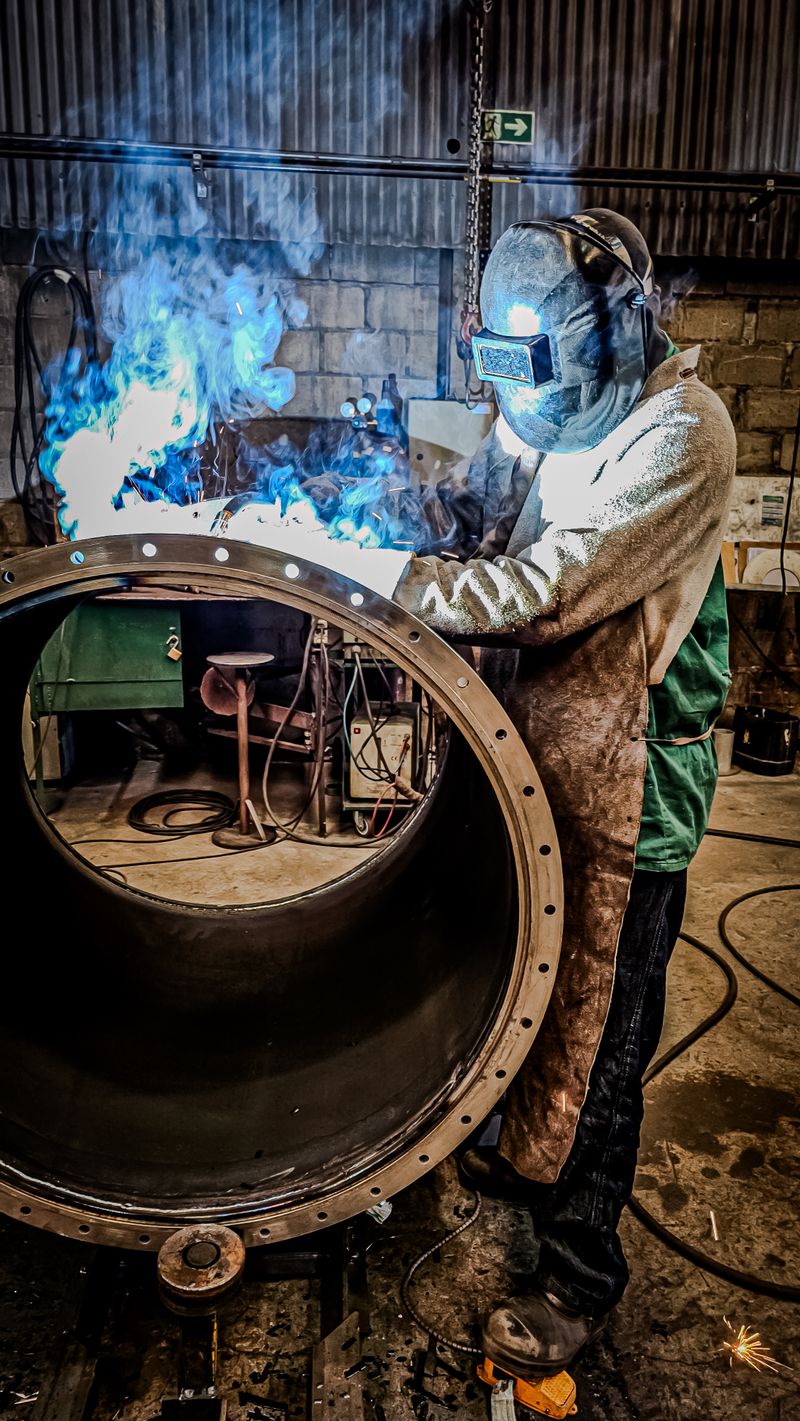
If you have spent any time around welders, you have heard terms like “2G,” “3G,” and “6G” thrown around. These alphanumeric codes are the universal shorthand for welding positions — the orientation of the weld joint relative to the welder and gravity. Understanding these designations is essential for reading welding procedure specifications, preparing for certification tests, and communicating effectively on the job.
This guide explains every welding position from 1G through 6G, what makes each one challenging, and how to adjust your technique accordingly.
The Position Code System
The AWS and ASME use a two-character code system for welding positions:
- The number (1–6) indicates the specific position
- The letter (G or F) indicates the joint type:
- G = Groove weld
- F = Fillet weld
For example, 3G means a groove weld in the vertical position. 2F means a fillet weld in the horizontal position.
The system is further divided into plate and pipe applications, with pipe having additional position designations.
Plate Welding Positions
1G — Flat Position
Description: The weld axis is horizontal, and the weld face is on the upper surface of the joint. You weld from above, with gravity helping you.
Difficulty: Easiest
In the flat position, gravity works in your favor, holding the molten weld pool in the joint. This allows you to use higher amperage, faster travel speeds, and larger weld beads. Most welders learn to weld in the flat position first.
Technique tips:
- Use a drag angle (for stick) or a slight push angle (for MIG)
- Work angle is straightforward — typically straight on or with a slight side tilt for T-joints
- You can use larger-diameter electrodes and higher deposition rates
1G is the production workhorse — shop fabrication facilities try to position as many joints as possible in the flat position for maximum speed and quality.
2G — Horizontal Position
Description: The weld axis is horizontal on a vertical surface. You are welding a vertical plate from the side.
Difficulty: Moderate
Gravity tries to pull the weld pool downward, causing it to sag on the bottom edge of the joint. You need to counteract this by adjusting your technique.
Technique tips:
- Use a slight upward angle with your electrode or gun (pointing 5–10 degrees upward)
- Maintain a short arc length to keep the puddle controlled
- Reduce your amperage slightly compared to flat welding
- For fillet welds, focus the arc more on the bottom plate to prevent undercut on the top toe
2G is common in structural steel erection, vessel fabrication, and anywhere you are welding on a vertical surface at waist to chest height.
3G — Vertical Position
Description: The weld axis is vertical. You are welding upward (or sometimes downward) on a vertical plate.
Difficulty: Challenging
Vertical welding requires you to fight gravity directly. The molten weld pool wants to run downward, making it harder to control the bead shape and prevent overlap.
Technique tips:
- Reduce amperage 10–15% compared to flat welding
- Use a tight arc and maintain consistent travel speed
- For vertical up (the standard direction for stick welding), use a weave pattern — triangular, zigzag, or “Christmas tree” patterns all work
- Pause at the sides of the weave to fill the toes and prevent undercut
- For vertical down, use a straight stringer bead with faster travel speed (common for sheet metal and thin plate)
3G certification is one of the most commonly required qualifications for structural welders.
4G — Overhead Position
Description: The weld axis is horizontal, but the weld face is on the underside of the joint. You are welding above your head.
Difficulty: Very Challenging
Overhead welding is the most physically demanding position. Gravity pulls the molten metal downward — toward your helmet, arms, and body. Controlling the puddle and maintaining bead shape requires skill and concentration.
Technique tips:
- Keep the arc as short as possible to minimize the amount of molten metal in the puddle at any time
- Use a slightly lower amperage than flat welding
- Travel at a steady, moderate pace — do not linger
- Keep the electrode or gun nearly perpendicular to the work surface
- Wear full leathers and protect yourself from spatter and falling slag
Safety note: Overhead welding produces significant spatter and falling sparks. Always wear a leather jacket, leather sleeves, and a welding cap under your helmet.
Qualification Implications for Plate
Passing both the 3G and 4G tests on plate qualifies you for all positions on structural plate per AWS D1.1. This is why the 3G/4G combination is the most requested certification for structural steel welders.
Pipe Welding Positions
Pipe welding positions use the same numbering system but with specific orientations of the pipe. Pipe positions are considerably more challenging because the weld joint curves, meaning the effective welding position constantly changes as you move around the pipe.
1G — Pipe Rolled, Flat Position
Description: The pipe is horizontal and rotated (rolled) while you weld in the flat position on top. The pipe is continuously turned by a turning roll or an assistant.
Difficulty: Easiest (pipe)
1G pipe welding is essentially flat welding on a rotating pipe. It is the most productive pipe welding position because you can maintain optimal conditions throughout the entire weld circumference.
2G — Pipe Vertical, Horizontal Weld
Description: The pipe axis is vertical, and you weld horizontally around the pipe.
Difficulty: Moderate
2G pipe is similar to 2G plate welding, just on a curved surface. Gravity pulls the puddle downward as you work around the pipe.
5G — Pipe Horizontal, Multiple Positions
Description: The pipe axis is horizontal and fixed (not rotated). You weld around the stationary pipe, which means the position changes continuously — starting flat on top, transitioning to vertical on the sides, and finishing overhead on the bottom.
Difficulty: Difficult
5G requires you to seamlessly transition between flat, vertical, and overhead techniques as you move around the pipe. This is where many welders struggle, because each quarter of the pipe demands a different approach.
Technique tips:
- On the top (flat position): Use standard flat technique
- On the sides (vertical position): Adjust to vertical up or down technique
- On the bottom (overhead position): Tight arc, controlled puddle
- Many welders split the weld into quarters, changing technique at each transition point
6G — Pipe Inclined at 45 Degrees
Description: The pipe axis is fixed at a 45-degree angle. You weld around the pipe without rotating it.
Difficulty: Most Difficult
6G is widely considered the most challenging welding position. The 45-degree incline means every point around the circumference presents a unique combination of flat, horizontal, vertical, and overhead conditions. You never weld in the same position for more than a few degrees of arc.
Why 6G matters:
Passing a 6G qualification test certifies you for all positions on pipe. It is the gold standard for pipe welders and commands the highest pay rates in the industry. Pipeline contractors, nuclear facilities, and petrochemical plants all require 6G-certified welders.
Technique tips:
- Master each individual position first before attempting 6G
- Practice the transitions between positions on a practice coupon
- Maintain consistent electrode angle and arc length as conditions change
- Be prepared to adjust amperage or technique mid-weld as the position shifts
A pipe welding practice fixture allows you to set up practice joints at any angle for realistic 6G preparation.
6GR — Restriction Ring Position
A variation of 6G, the 6GR position includes a restriction ring placed near the weld joint that limits access and electrode angle. This simulates the tight clearances encountered in shipbuilding and structural tubular connections. The “R” stands for restricted.
How Position Affects Welding Parameters
| Parameter | Flat (1G) | Horizontal (2G) | Vertical (3G) | Overhead (4G) |
|---|---|---|---|---|
| Amperage | Highest | Moderate | Reduced 10–15% | Reduced 5–10% |
| Travel speed | Fastest | Moderate | Slower | Moderate |
| Electrode size | Largest | Moderate | Smaller | Smaller |
| Arc length | Normal | Short | Short | Shortest |
| Weave width | Wide | Moderate | Controlled | Narrow |
Practical Advice for Welding Out of Position
Master Flat First
Do not attempt vertical or overhead welding until you can consistently produce sound, visually acceptable welds in the flat position. Flat welding teaches you the fundamental skills — maintaining arc length, controlling travel speed, and reading the weld puddle — that carry over to every other position.
Use Low-Hydrogen Electrodes for Vertical and Overhead
E7018 runs more smoothly out of position than E6010 or E6013 for many welders. The low-hydrogen coating produces a less aggressive arc with a more manageable slag, making it easier to control the puddle in challenging positions.
Practice on Coupons
Cut practice coupons from the same material and thickness you will be working on or testing on. Weld coupons in each position and evaluate them visually, then cut and bend them to check for internal defects.
A set of pre-beveled practice coupons saves preparation time and ensures consistent joint geometry for practice.
Key Takeaways
Welding positions from 1G through 6G represent increasing levels of difficulty as you move from gravity-assisted flat welding to the fully inclined 6G pipe position. Each position requires specific adjustments to amperage, travel speed, electrode angle, and weave technique. Mastering all positions — especially 3G, 4G, and 6G — is the path to the highest-paying welding jobs in structural steel, pipe fitting, and pipeline construction.
Related Articles
Positions are directly tied to certification — the how to pass a welding certification test guide explains how 3G and 4G plate tests qualify you for all positions under AWS D1.1, and what the testing process looks like from setup through bend testing. Welding blueprints and WPS documents specify which positions are required for each weld — the how to read welding blueprints guide explains how position designations appear in specifications and what the codes mean. Out-of-position welding places higher demands on your electrode choice — the understanding welding electrode classifications guide explains why all-position electrodes like E7018 and E6011 behave differently in vertical and overhead applications.

The Welder's Guide Editorial Team
Independent trade-focused editorial team