How to Pass a Welding Certification Test (AWS D1.1)
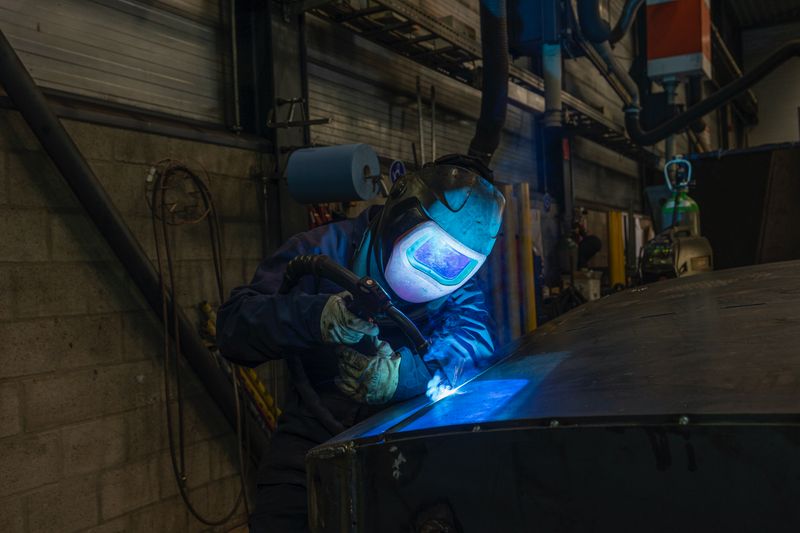
Earning your AWS D1.1 welding certification is one of the most significant career steps you can take as a welder. The Structural Welding Code — Steel (D1.1) published by the American Welding Society is the most widely referenced welding code in North America, and certification to this standard opens doors to structural steel, heavy equipment, and industrial fabrication work.
But passing the test requires more than just welding skill. You need to understand the test requirements, prepare strategically, and execute under pressure. This guide covers everything you need to know to walk into your certification test with confidence.
Understanding the AWS D1.1 Certification
AWS D1.1 certification is not a single test — it is a framework that covers multiple processes, positions, and joint configurations. When someone says they are “D1.1 certified,” they mean they have passed a specific qualification test within the D1.1 code. Your certification is limited to the process, position, material thickness, and joint type you tested on.
Common Qualification Tests
The most frequently requested D1.1 qualifications include:
- 3G (Vertical) and 4G (Overhead) on 1-inch plate with SMAW (E7018) — This is the most widely requested combination for structural steel work. Passing both 3G and 4G qualifies you for all positions on structural plate.
- 6G on 2-inch schedule 80 pipe — The gold standard for pipe welders. Passing the 6G position qualifies you for all positions on pipe.
- 2G, 3G, and 4G on plate with GMAW — Common for shop fabrication work using MIG.
Before scheduling your test, confirm exactly which qualification your employer or prospective employer requires.
Preparing for the Test
Know the Exact Test Parameters
Request the Welding Procedure Specification (WPS) you will be tested on before test day. The WPS defines:
- Base metal type and thickness
- Joint design (groove angle, root opening, land/root face)
- Welding process and filler metal
- Shielding gas type and flow rate (if applicable)
- Current type, polarity, and amperage range
- Preheat and interpass temperature requirements
- Position
Study the WPS carefully. You will be expected to follow it within the stated parameters during the test.
Before accepting a test or project document package, confirm what each record actually controls. The WPS, PQR, and welder qualification record guide separates production instructions, procedure-test evidence, and an individual’s documented qualified range.
Practice Under Test Conditions
This is the single most important thing you can do. Set up a test plate exactly as it will be configured for your certification — same thickness, same joint preparation, same position, same electrodes. Then weld it start to finish without stopping to adjust or second-guess yourself.
Practice the entire sequence:
- Fit-up and tack welding
- Root pass
- Hot pass
- Fill passes
- Cap pass
Time yourself. A typical 3G plate test allows about 45–60 minutes for completion. If you are consistently finishing practice coupons in 30 minutes, you are rushing. If you need 90 minutes, you need to build speed.
Use the Same Consumables You Will Test With
If the test specifies Lincoln E7018, practice with Lincoln E7018. Different manufacturers’ rods run slightly differently, and you do not want to be adjusting to a new feel on test day. The same applies to MIG wire brands and shielding gas mixes.
A reliable welding practice kit with pre-beveled coupons can save you time on preparation and let you focus on welding.
Test Day Strategy
Arrive Early and Set Up Carefully
Get to the testing facility with time to spare. Rushing creates anxiety, and anxiety ruins welds. Take your time setting up your machine, checking your leads, and organizing your workspace.
Verify Your Settings
Before striking an arc on the test coupon, run a few practice beads on scrap material to confirm your amperage, voltage, and travel speed feel right. Most testing facilities allow this. Use the same thickness scrap as your test coupon for an accurate feel.
Follow the WPS Exactly
The inspector will verify that your welding parameters fall within the WPS range. If the WPS specifies 90–130 amps and you are running at 140, that is grounds for disqualification — regardless of how good the weld looks.
Keep your interpass temperatures within the WPS range. Use a temperature crayon or infrared thermometer between passes.
Manage Your Electrodes
If you are testing with E7018:
- Take only the rods you need from the rod oven
- Do not leave rods sitting out for extended periods
- Do not use rods that have been contaminated by touching the plate or falling on the floor
- Keep your electrode stubs to a reasonable length — excessive stub loss wastes time and rods
Control Your Pace
Nervous welders tend to rush. Take a breath between passes. Inspect each pass with a wire brush before starting the next. Look for slag inclusions, undercut, or incomplete fusion that you can correct on the next pass.
Understanding the Testing Process
Visual Inspection
Your completed coupon will first undergo visual inspection by the Certified Welding Inspector (CWI). The inspector will evaluate:
- Weld size (using a fillet weld gauge for fillet tests)
- Profile and appearance
- Undercut (must not exceed 1/32 inch or as specified in the code)
- Porosity visible on the surface
- Overlap, incomplete fusion, and crack indications
- Reinforcement height (typically limited to 1/8 inch maximum)
Common reasons for failing visual inspection:
- Undercut exceeding the code limit
- Excessive reinforcement (weld too tall)
- Insufficient throat or leg size
- Visible porosity or slag inclusions
- Cracks of any size
Destructive Testing
If you pass visual inspection, the coupon is cut into test specimens for destructive testing:
Bend tests — Two root bends and two face bends (for a standard groove weld on plate). Each specimen is bent around a mandrel of specified diameter. The bent surface is examined for defects.
Acceptance criteria for bend tests:
- No cracks or openings exceeding 1/8 inch (3 mm) in any direction
- Corners cracking is generally acceptable if the crack does not exceed the limit
- No slag inclusions, porosity, or incomplete fusion open on the bent surface
Common reasons for failing bend tests:
- Slag inclusions that open up during bending
- Lack of fusion at the root or sidewall
- Porosity clusters in the weld metal
- Excessive oxidation from insufficient shielding
Tips for Each Pass
Root Pass
The root pass is where most certifications are won or lost. Focus on complete root penetration without excessive melt-through (icicles on the back side). On open-root joints, maintain a consistent keyhole and feed the rod or wire at a steady pace.
Hot Pass
The hot pass drives out slag from the root and builds weld thickness quickly. Use slightly higher amperage than the root pass and a steady travel speed. Do not rush — incomplete fusion here will show up in bend tests.
Fill Passes
Build the weld up evenly on both sides of the groove. Avoid digging into the sidewalls or leaving valleys that can trap slag. Stringer beads are generally preferred over wide weaves for fill passes.
Cap Pass
The cap is your visual impression. Aim for a slightly convex profile that ties into the base metal smoothly with no undercut. A consistent travel speed and steady weave pattern produce the best results.
Common Mistakes That Cause Failure
- Not reading the WPS — Welding outside the specified parameters is an automatic fail.
- Rushing the root pass — Poor root penetration is the number one reason for bend test failures.
- Insufficient cleaning between passes — Trapped slag between passes will crack open in bend tests.
- Not controlling interpass temperature — Exceeding the WPS temperature range can disqualify your coupon.
- Poor fit-up — If the root opening or land dimension is wrong, your weld will suffer regardless of technique.
Maintaining Your Certification
AWS D1.1 certifications are valid as long as you continue to perform the qualified welding without a break exceeding six months. Your employer must sign a continuity log every six months confirming you have been welding within the scope of your qualification. If your continuity lapses, you must retest.
Keep your continuity documentation current and stored safely. A welding certification document organizer or digital backup ensures you always have proof of your qualifications.
Key Takeaways
Passing an AWS D1.1 certification test comes down to preparation, not talent. Know the WPS, practice under test conditions, manage your nerves on test day, and focus on clean root penetration and thorough interpass cleaning. The certification process is designed to verify that you can produce sound welds consistently — and with focused practice, you absolutely can.
Related Articles
Understanding welding positions is essential preparation for certification — the welding positions guide explains the 1G through 6G system and the specific technique adjustments each position requires. Electrode selection and handling matters during the test, particularly for E7018 — the understanding welding electrode classifications guide covers storage, current requirements, and how to read the classification codes. Once certified, keeping your welds defect-free is critical for maintaining continuity — the common welding defects and how to fix them guide explains how to identify and correct the problems that most commonly cause certification failures.

The Welder's Guide Editorial Team
Independent trade-focused editorial team