Understanding Welding Electrode Classifications (E7018, E6013, etc.)
Quick answer
Electrode classifications describe properties such as tensile strength, welding position, coating type, current compatibility, and sometimes low-hydrogen handling. The code on the rod is a selection shortcut, not a substitute for the welding procedure.
Common questions
- What does E7018 generally tell you?
- It identifies a low-hydrogen stick electrode family with a specified tensile-strength class and position/current usability. It also needs correct storage and handling to maintain low-hydrogen performance.
- Can you swap electrodes freely?
- No. Electrode choice affects strength, penetration, ductility, hydrogen control, and code compliance. Use the electrode required by the procedure, drawing, or repair specification.
Source note: Reviewed July 2026 against the article guidance and common welding safety practice; material specifications, procedure requirements, and shop safety rules control final settings.
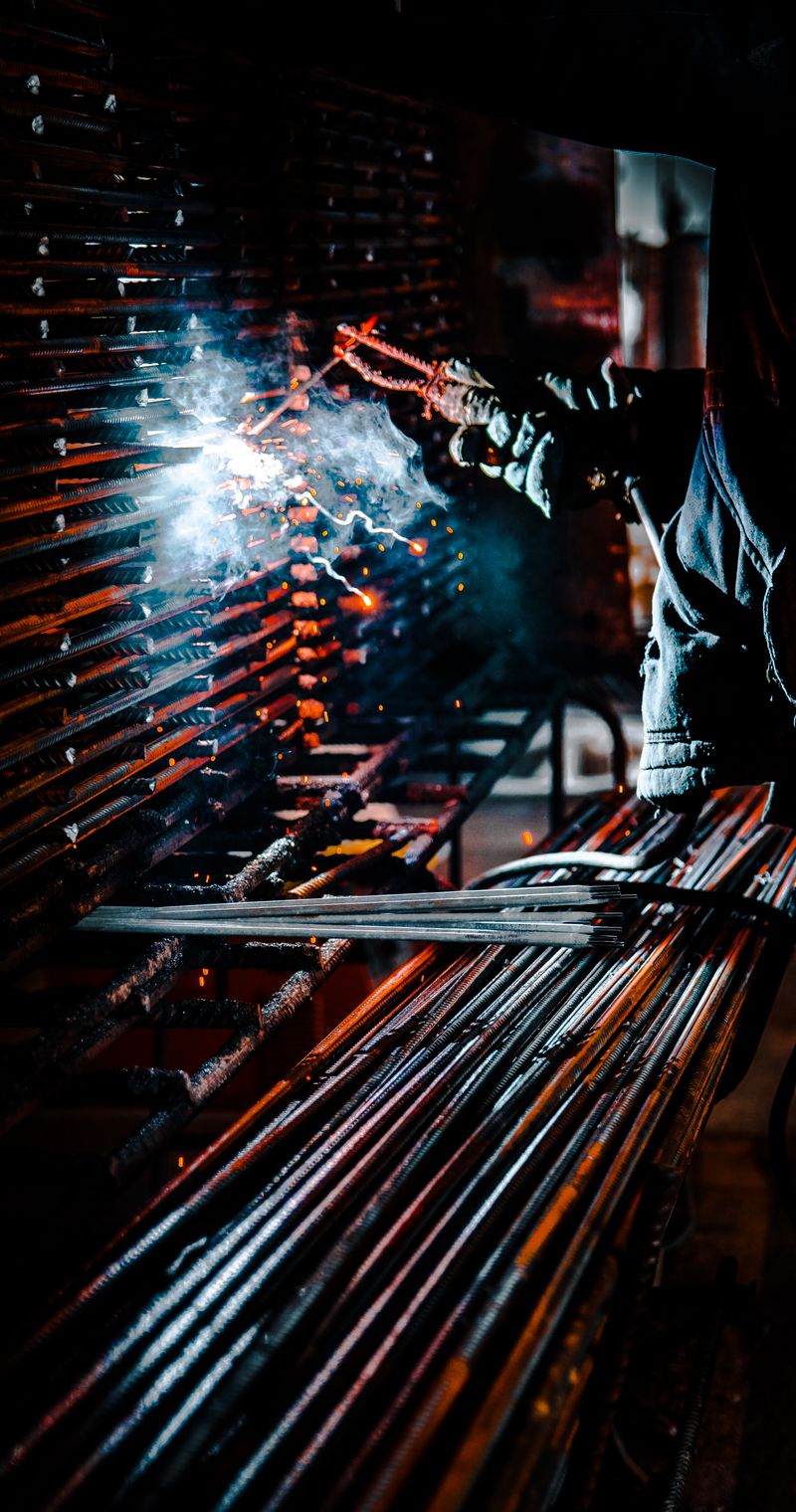
If you have ever stood in front of a welding supply display trying to figure out which rod to buy, you are not alone. The alphanumeric codes printed on stick welding electrode packages — E7018, E6013, E6010, and so on — tell you everything you need to know about how that electrode performs, what positions it works in, and what type of coating it has. You just need to know how to read them.
This guide breaks down the AWS (American Welding Society) electrode classification system so you can always reach for the right rod.
The AWS Electrode Classification System
The AWS uses a standardized numbering system for shielded metal arc welding (SMAW) electrodes. Let’s break down the most popular electrode as an example:
E7018
- E — Electrode (used for arc welding)
- 70 — Minimum tensile strength of the deposited weld metal, in thousands of PSI (70,000 PSI)
- 1 — Welding position the electrode is designed for (1 = all positions)
- 8 — Type of flux coating and welding current type
Every SMAW electrode follows this four- or five-digit format. Once you understand each position in the code, you can decode any rod on the shelf.
Breaking Down Each Digit
The Prefix: E
The “E” simply stands for electrode. Every SMAW rod starts with this letter.
Digits 1–2 (or 1–3): Tensile Strength
The first two (or sometimes three) digits after the E indicate the minimum tensile strength of the weld deposit in thousands of PSI.
| Code | Tensile Strength |
|---|---|
| E60xx | 60,000 PSI minimum |
| E70xx | 70,000 PSI minimum |
| E80xx | 80,000 PSI minimum |
| E90xx | 90,000 PSI minimum |
| E100xx | 100,000 PSI minimum |
| E110xx | 110,000 PSI minimum |
For most general fabrication work on mild steel, E60xx or E70xx electrodes are sufficient. Higher-strength electrodes are used for matching high-strength base metals in structural and pressure vessel applications.
The Second-to-Last Digit: Welding Position
This digit tells you what positions the electrode is designed to weld in:
| Digit | Position |
|---|---|
| 1 | All positions (flat, horizontal, vertical, overhead) |
| 2 | Flat and horizontal fillet only |
| 3 | Flat only |
| 4 | Flat, horizontal, overhead, and vertical down |
| 5 | Flat, horizontal, and vertical down |
Most general-purpose electrodes carry a “1” designation, meaning they can be used in all positions. Electrodes with a “2” designation are high-deposition rods meant for flat and horizontal fillet welding in shop environments.
The Last Digit: Flux Coating and Current Type
The final digit (0–8) encodes the flux coating composition and the type of welding current the electrode is compatible with. This is the most complex part of the classification, as it affects arc characteristics, penetration, and slag behavior.
Here are the most common designations:
| Last Digit | Flux Type | Current |
|---|---|---|
| 0 | Cellulose sodium | DCEP |
| 1 | Cellulose potassium | AC, DCEP, DCEN |
| 2 | Rutile sodium | AC, DCEN |
| 3 | Rutile potassium | AC, DCEP, DCEN |
| 4 | Rutile iron powder | AC, DCEP, DCEN |
| 5 | Low-hydrogen sodium | DCEP |
| 6 | Low-hydrogen potassium | AC, DCEP |
| 8 | Low-hydrogen iron powder | AC, DCEP |
This digit is critical because it determines how the electrode runs, what kind of penetration you get, and whether you need a specific polarity.
The Most Common Electrodes Explained
E6010 — The Deep Penetration Rod
E6010 features a cellulose-based coating that produces a forceful, digging arc with deep penetration. It is the go-to rod for root passes on pipe, dirty or rusty steel, and open-gap weld joints.
- Characteristics: Aggressive arc, deep penetration, thin slag, flat weld bead
- Current: DCEP only
- Best for: Root passes, pipe welding, outdoor work, dirty base metal
- Downside: Heavy spatter, not great for thin metal, requires some skill to control
E6011 — The Versatile Cousin of 6010
E6011 is similar to E6010 but runs on AC as well as DC, making it the rod of choice for welders using AC-only transformer machines.
- Characteristics: Similar to 6010 but with slightly less aggressive arc
- Current: AC, DCEP, DCEN
- Best for: AC machines, farm repairs, general purpose work on dirty metal
- Downside: More spatter than some alternatives
E6013 — The Beginner’s Friend
E6013 has a rutile-based flux coating that produces a soft, stable arc with medium penetration. The slag freezes quickly and peels easily, making it one of the easiest rods to strike and maintain an arc with.
- Characteristics: Soft arc, medium penetration, smooth bead appearance, easy slag removal
- Current: AC, DCEP, DCEN
- Best for: Beginners, sheet metal, light fabrication, cosmetic welds
- Downside: Shallow penetration not suitable for structural work or thick material
A box of Lincoln Electric E6013 electrodes is a great starting point for anyone learning stick welding.
E7018 — The Structural Standard
E7018 is the most widely used low-hydrogen electrode in the world. Its basic (calcium-based) flux coating produces a quiet arc with medium penetration and a exceptionally strong, ductile weld deposit. It is the required electrode for most structural steel construction per AWS D1.1.
- Characteristics: Quiet arc, medium penetration, strong and ductile welds, thick slag
- Current: AC, DCEP
- Best for: Structural steel, pressure vessels, critical applications, heavy equipment repair
- Downside: Requires clean base metal, electrodes must be kept dry, harder to strike an arc
E7024 — The High-Deposition Rod
E7024 is a high-iron-powder electrode designed for fast deposition in flat and horizontal positions. It lays down a lot of metal quickly, making it ideal for capping heavy fillet welds in the shop.
- Characteristics: Very high deposition rate, smooth bead, works flat and horizontal only
- Current: AC, DCEP
- Best for: Heavy fillet welds, flat position capping passes, high-production shop work
- Downside: Limited to flat and horizontal positions
Optional Suffixes
Some electrodes include a suffix after the standard classification that indicates additional requirements:
- -1 — Increased toughness (impact testing at lower temperatures)
- -H4, -H8, -H16 — Diffusible hydrogen limit (lower numbers mean less hydrogen, reducing cracking risk)
- -R — Moisture-resistant coating
For example, E7018-H4R is a 70,000 PSI all-position low-hydrogen iron powder electrode with a maximum diffusible hydrogen of 4 mL/100g and moisture-resistant coating. This is the electrode specified for critical structural work.
Electrode Storage and Handling
Low-hydrogen electrodes like E7018 are hygroscopic — they absorb moisture from the air. Moisture in the coating introduces hydrogen into the weld, which can cause underbead cracking in hardenable steels.
Storage guidelines:
- Keep low-hydrogen electrodes in a sealed container or rod oven at 250–300°F once opened
- Unopened hermetically sealed cans can be stored at room temperature
- E6010 and E6013 are less sensitive to moisture but should still be kept dry for best performance
- If electrodes get wet, discard them — do not attempt to dry them in an oven and reuse them for critical work
A dedicated electrode holding oven is essential for any shop doing structural or code work with low-hydrogen rods.
Temperature alone is not a complete control. The E7018 storage and handling checklist separates sealed packages, holding ovens, field quivers, exposure records, redrying instructions, and discard criteria under the applicable manufacturer, WPS, and code requirements.
Choosing the Right Electrode for Your Project
Here is a quick decision framework:
- Match tensile strength to your base metal. For A36 mild steel (58,000 PSI tensile), E6010 or E7018 both work.
- Consider joint condition. Dirty, rusty, or painted metal calls for E6010 or E6011. Clean prepared joints work with any rod.
- Match position requirements. Vertical and overhead work requires an all-position rod (xx1x or xx8).
- Check code requirements. Structural welding per AWS D1.1 often mandates low-hydrogen E7018.
- Evaluate your skill level. Beginners will have an easier time with E6013 before moving to E7018.
Key Takeaways
The AWS electrode classification system tells you tensile strength, welding position, flux type, and current compatibility in a simple code. Knowing how to read E7018, E6013, E6010, and other common designations allows you to select the right electrode for every application. Keep a selection of two to three electrode types on hand — typically a deep-penetration rod (E6010/E6011), a general-purpose rod (E6013), and a structural low-hydrogen rod (E7018) — and you will be prepared for nearly any stick welding job.
Related Articles
Putting electrode knowledge into practice in technique is the next step — the stick welding tips for beginners guide covers arc striking, amperage settings, weave patterns, and the practice exercises that build skill with each electrode type. If you are preparing for certification, knowing which electrodes are required for each test is essential — the how to pass a welding certification test guide explains how E7018 is used in AWS D1.1 qualification testing and what storage requirements you will need to follow. For welders working on structural projects, the how to read welding blueprints guide explains how electrode and process specifications appear in WPS documents and welding symbols.

The Welder's Guide Editorial Team
Independent trade-focused editorial team