Choosing the Right Auto-Darkening Welding Helmet
Quick answer
Choose a welding helmet based on shade range, optical clarity, sensor performance, comfort, coverage, grind mode, and the processes you use. A helmet that is uncomfortable or unreliable will not protect well in real work.
Common questions
- What matters most in an auto-darkening helmet?
- Look for reliable sensors, suitable shade range, optical clarity, adjustable sensitivity and delay, comfortable headgear, and coverage for the welding positions you use.
- Do hobby welders need an expensive helmet?
- Not necessarily, but they should still avoid unreliable low-quality helmets. Eye protection, comfort, and consistent darkening are safety basics, not luxury features.
Source note: Reviewed July 2026 against the article guidance and common welding safety practice; material specifications, procedure requirements, and shop safety rules control final settings.
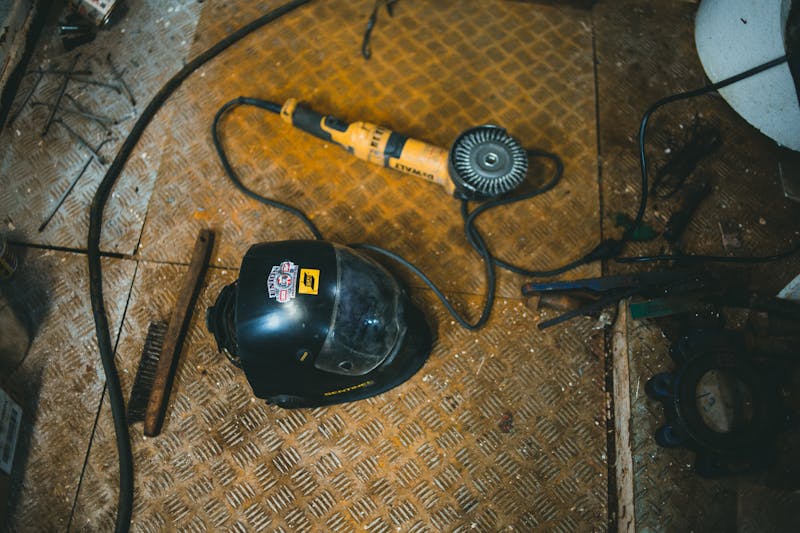
Choosing the Right Auto-Darkening Welding Helmet
Your welding helmet is the single most important piece of equipment you will buy. It protects your eyes from blinding arc radiation, shields your face from sparks and spatter, and directly affects the quality of your welds. A good helmet reduces neck fatigue, improves visibility, and makes welding more comfortable during long sessions.
But with dozens of helmets on the market ranging from $40 to $500+, how do you choose the right one? This guide breaks down every feature you need to understand.
How Auto-Darkening Helmets Work
Auto-darkening helmets use a liquid crystal display (LCD) layer sandwiched between protective cover lenses. In the inactive state, the lens stays at a light shade (typically shade 3 or 4), allowing you to see your work clearly. When the arc strikes, sensors detect the light and the LCD darkens to your selected shade in a fraction of a millisecond.
Key components include:
- Arc sensors — Detect the welding arc and trigger darkening
- LCD cartridge — The layer that changes shade
- Solar cells — Power the lens (with battery backup)
- Controls — Shade, sensitivity, and delay adjustments
Key Features to Consider
Shade Range
The shade number determines how dark the lens becomes when the arc strikes. Higher numbers mean darker filtration.
- Shade 8-10 — Low-amperage TIG welding (under 100 amps)
- Shade 10-12 — MIG and stick welding at moderate amperage (100-200 amps)
- Shade 12-13 — High-amperage stick and MIG (200-300+ amps)
- Shade 13-14 — Heavy industrial applications and carbon arc gouging
Look for a helmet with a variable shade range of 9-13 to cover most processes. Some premium helmets extend to shade 5-13, which is useful for low-amperage TIG work. The Optrel Crystal 2.0 offers exceptional clarity across its shade range.
Number of Arc Sensors
More sensors mean more reliable arc detection, especially when welding in tight spaces or at odd angles where some sensors may be blocked.
- 2 sensors — Budget helmets. Acceptable for straightforward MIG and stick work.
- 3-4 sensors — The sweet spot for most welders. Provides reliable detection from any angle.
- 4+ sensors — Ideal for TIG welding at low amperage, where the arc is smaller and harder to detect.
If you TIG weld below 30 amps, prioritize a helmet with at least four sensors and high sensitivity settings.
Lens Reaction Speed
Reaction speed is how quickly the lens transitions from light to dark. Faster switching means less exposure to arc flash.
- 1/10,000 second — The industry standard. Adequate for most applications.
- 1/16,000 to 1/25,000 second — Premium helmets. Worth the investment if you weld for hours at a time.
- 1/3,600 second or slower — Budget helmets. Noticeable flash during rapid tack welding.
Viewing Area Size
Larger viewing areas reduce the need to nod your helmet down precisely and decrease neck strain. However, larger LCD panels cost more.
- 3.86 x 1.73 inches — Standard size. Functional but tight.
- 3.94 x 2.36 inches — Good balance of size and price.
- 3.94 x 3.86 inches — Extra-large. Excellent visibility for pipe and position welding.
Optical Clarity
The optical clarity rating (EN379 standard) uses a four-digit scale where 1/1/1/1 is the best possible score:
- Optical class — Image clarity and distortion
- Scattering of light — Haze and blurring
- Homogeneity — Consistent shade across the lens
- Angular dependence — Visibility at off-center angles
A 1/1/1/1 rated helmet provides the clearest view of the weld pool. This is especially important for TIG welding, where you need to see fine details. The 3M Speedglas 9100 consistently earns top optical ratings.
True Color Technology
Traditional auto-darkening lenses have a green or blue tint that distorts colors. True color technology reduces this tint, making it easier to distinguish the weld pool from the surrounding metal. This feature is particularly valuable for TIG welders who need to read the color of the molten pool to gauge temperature.
Grind Mode
Grind mode locks the lens at shade 3-4 so you can use the helmet for grinding without the arc sensor flashing dark from sparks. This eliminates the need to switch between a welding helmet and safety glasses when grinding between passes.
Look for an external grind mode toggle so you can switch without removing the helmet.
Power Source
Most auto-darkening helmets use a combination of solar power and replaceable batteries:
- Solar + replaceable battery — Reliable. Replace the battery every 1-2 years.
- Solar + rechargeable battery — Convenient but the battery eventually degrades.
- Solar only — Cannot be used in dark shops without sufficient ambient light to charge the cells.
Helmets with user-replaceable batteries are preferable. You do not want your helmet dying mid-weld.
Helmet Weight and Comfort
A heavy helmet causes neck fatigue after just 30 minutes of welding. Look for helmets weighing 18 ounces or less. The headgear matters too — adjustable ratchet-style headbands with padded sweatbands distribute weight evenly.
Key comfort features:
- Adjustable headgear — Multiple tilt angles and crown adjustments
- Padded headband — Reduces pressure points during long sessions
- Lightweight shell — Nylon or composite materials resist heat without adding weight
- Breathable design — Internal air channels reduce fogging
Budget vs. Premium Helmets
| Feature | Budget ($40-80) | Mid-Range ($80-200) | Premium ($200-500+) |
|---|---|---|---|
| Shade range | Fixed 9-13 | Variable 5/9-13 | Variable 4/5-13/14 |
| Sensors | 2 | 3-4 | 4+ |
| Reaction speed | 1/3,600s | 1/10,000s | 1/16,000s+ |
| Optical class | 1/2/1/2 | 1/1/1/2 | 1/1/1/1 |
| True color | No | Sometimes | Yes |
| Grind mode | Sometimes | Yes | Yes |
Recommended Helmets by Process
Best for MIG Welding
The Lincoln Electric Viking 3350 offers a large 3.74 x 3.33-inch viewing area, four sensors, and 1/1/1/1 optical clarity at a competitive price.
Best for TIG Welding
The Everlast EPS1200P features a shade 5-13 range with high sensitivity for low-amperage TIG. Four sensors ensure reliable arc detection even at 5 amps.
Best for Stick Welding
Stick welding generates more spatter than other processes, so durability matters. The Miller Digital Elite has a rugged shell, four arc sensors, and clear lens technology.
Best Budget Option
The Antra AH6-260-0000 delivers four sensors, variable shade 4-13, and grind mode for under $60. It is the best value helmet for beginners.
Helmet Maintenance Tips
- Replace the outside cover lens when it becomes pitted or scratched. Cloudy lenses reduce visibility.
- Clean the LCD cartridge with a microfiber cloth. Never use solvents.
- Store the helmet face-up in a cool, dry place away from direct sunlight when not in use.
- Test the sensors monthly by striking an arc and verifying the lens darkens immediately.
- Replace batteries proactively before they die completely.
Final Thoughts
Do not skimp on your welding helmet. You will spend hundreds of hours looking through it, and your eyesight depends on it. Choose a helmet with the right features for your primary process, invest in good optical clarity, and maintain it properly. The difference between a $50 helmet and a $200 helmet is noticeable the moment you strike an arc.
Related Articles
A helmet is just one part of complete welding protection. The welding safety essentials guide covers gloves, clothing, respiratory protection, and fire prevention practices. If you are not sure which welding process your helmet needs to support, the MIG vs. TIG vs. stick welding comparison helps you decide which process suits your work. For TIG welders in particular, understanding shielding gases is essential — the right gas choice affects the arc characteristics your helmet lens shade must handle.
Fit helmet choice into the welding safety system
These related guides keep helmet selection connected to PPE, respiratory controls, setup, and practice feedback.
- Welding safety essentials
Confirm lens shade, eye protection, fire protection, ventilation, and PPE basics.
- Respirators and fume extractors
Check respirator clearance and fume-control needs before choosing a helmet shell.
- How to set up a MIG welder
Match visibility and controls to the process and practice setup.
- Welding equipment maintenance log
Document helmet lens, headgear, PPE, lead, and machine condition before practice.

The Welder's Guide Editorial Team
Independent trade-focused editorial team