How to Calculate Welding Costs for Your Projects
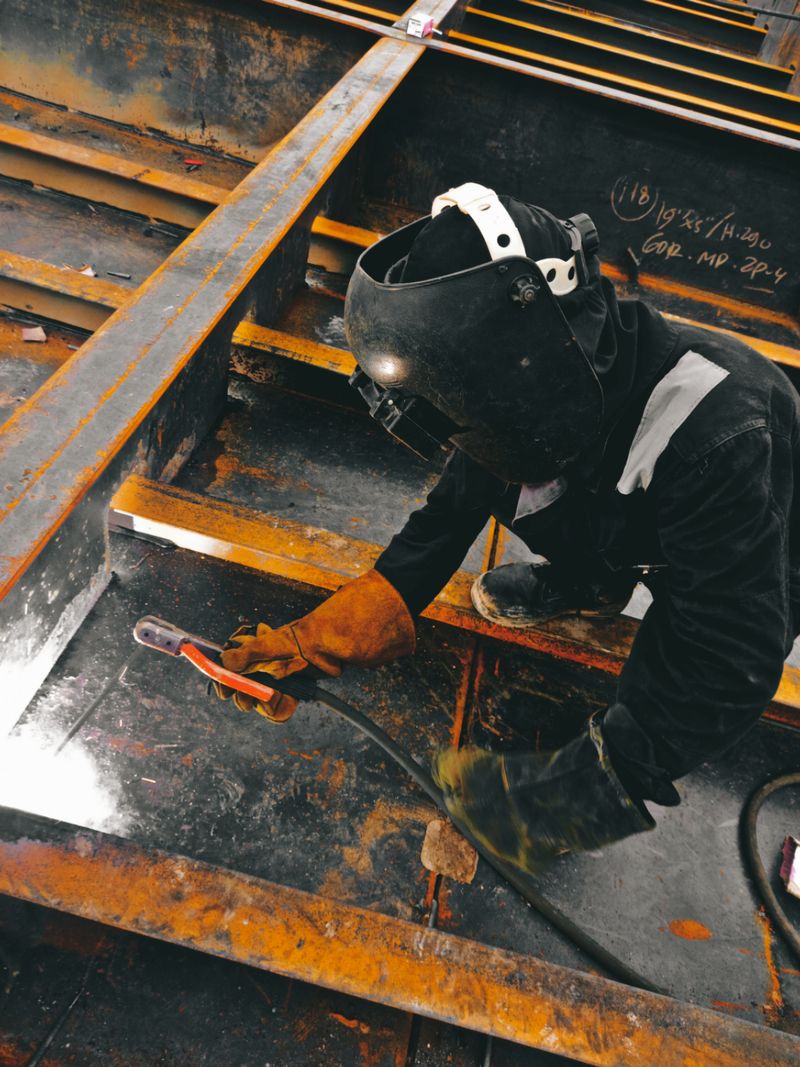
Accurately calculating welding costs is the difference between a profitable project and one that eats into your margins. Whether you are bidding on a structural steel job, quoting a custom fabrication, or pricing repairs for a client, you need a systematic approach to estimating. Too many welders rely on gut feelings or rough guesses, and that is a fast track to underbidding.
This guide walks you through a practical, step-by-step method for calculating welding costs so you can price your work with confidence.
Quick Answer: Start With Cost per Finished Weld
A useful welding estimate starts with base metal, filler metal, shielding gas, consumables, labor, overhead, and profit. The mistake that ruins bids is pricing only arc time. Fit-up, grinding, travel, setup, inspection, and rework allowance often take more hours than the weld itself.
For repeatable work, calculate a cost per foot of weld by process and material thickness, then compare it against actual job results. That turns each completed job into better estimating data for the next one.
The Five Cost Categories
Every welding project has five primary cost components. Missing any one of them means your estimate is too low.
1. Material Costs
Material costs include the base metal you are welding and the filler metal you are consuming.
Base metal is usually straightforward. Calculate the total linear feet, square feet, or weight of material needed, then multiply by your purchase price. Add 5–10% for waste, cutoffs, and mistakes.
Filler metal costs depend on the type and diameter of wire or rod you are using. To calculate filler metal consumption:
- Determine the total length of weld required
- Calculate the cross-sectional area of the weld joint (use the weld size and joint design)
- Multiply the cross-sectional area by the weld length to get the volume
- Multiply the volume by the density of the filler metal to get the weight
- Add 10–20% for spatter, stub loss, and overspray
For a quick approximation, most estimators use a deposition rate table that gives pounds of filler metal per foot of weld for common joint designs.
2. Labor Costs
Labor is typically the largest single cost on any welding project. Calculate it by estimating the total arc-on time plus non-welding time.
Arc-on time is the time actually spent welding. Estimate this by dividing the total weld deposit weight by your expected deposition rate (pounds per hour).
Non-welding time includes fit-up, tack welding, grinding, positioning, inspection, and cleanup. On a typical fabrication job, non-welding time can be two to four times the actual arc-on time.
Multiply the total estimated hours by your fully burdened labor rate. Your burdened rate should include:
- Base wage or your desired hourly rate
- Payroll taxes (FICA, FUTA, SUTA)
- Workers’ compensation insurance
- Health insurance and benefits
- Paid time off
If your base wage is $30/hour, your fully burdened rate might be $45–$55/hour after all add-ons.
3. Shielding Gas Costs
Shielding gas is easy to overlook but adds up over a large job. To calculate gas costs:
- Determine your flow rate in cubic feet per hour (CFH) — typically 20–40 CFH for MIG, 15–25 CFH for TIG
- Multiply by the total estimated arc-on hours
- Multiply by the cost per cubic foot of gas
For example, if you are running MIG at 35 CFH for 20 hours of arc-on time with gas costing $0.50 per cubic foot:
35 CFH × 20 hours × $0.50/CFH = $350 in shielding gas
Gas cost per cubic foot depends on your supplier and cylinder size. Larger cylinders and bulk contracts bring the per-unit cost down significantly.
4. Consumables and Accessories
Beyond filler metal and gas, you will burn through a range of consumables:
- Contact tips, nozzles, and liners (MIG)
- Tungsten electrodes (TIG)
- Grinding wheels, flap discs, and cut-off wheels
- Chipping hammers, wire brushes, and file belts
- Welding lens covers and protective equipment
Track these costs over time so you have real data. A good rule of thumb for estimation is to add 5–10% of total labor and material costs as a consumables allowance.
5. Overhead and Equipment Costs
Overhead includes everything it costs to keep your shop running, whether or not you are welding:
- Shop rent or mortgage
- Electricity (welders draw significant power)
- Insurance (general liability, property, equipment)
- Equipment payments, depreciation, and maintenance
- Administrative costs (accounting, licensing, office supplies)
Most small shops calculate overhead as a percentage of labor. A common range is 25–50% of direct labor costs, depending on your operation.
The Cost Calculation Formula
Put it all together with this formula:
Total Project Cost = Materials + Labor + Gas + Consumables + Overhead
Once you have the total cost, add your profit margin. For most custom fabrication work, a profit margin of 15–30% on top of total cost is standard. Structural and industrial work may run lower margins at higher volume.
Example calculation for a small project:
| Cost Category | Amount |
|---|---|
| Base metal (steel plate, tubing) | $480 |
| Filler metal (ER70S-6 wire) | $35 |
| Labor (12 hours × $50/hr burdened) | $600 |
| Shielding gas (75/25 argon/CO₂) | $45 |
| Consumables (tips, discs, etc.) | $50 |
| Overhead (30% of labor) | $180 |
| Total Cost | $1,390 |
| Profit margin (25%) | $348 |
| Bid Price | $1,738 |
Pricing Strategies
Cost-Plus Pricing
This is the method described above. You calculate all costs, add a markup, and submit your price. It is straightforward and ensures profitability. The downside is that it does not account for market rates — your cost-plus price may be higher or lower than what the market will bear.
Market-Based Pricing
Research what other fabricators in your area charge for similar work. Price your services competitively, then work backward to ensure your costs allow for acceptable margins. This approach works well in competitive markets but requires you to know your costs cold.
Value-Based Pricing
For specialized work, artistic fabrication, or rush jobs, price based on the value you deliver to the client rather than your costs. A client who needs a production line back up and running will pay a premium for speed and expertise.
Tips for More Accurate Estimates
- Track actual time on completed projects — Compare your estimates to reality and adjust your assumptions. Over time, your estimates will become remarkably accurate.
- Use a welding cost calculator — Tools like the MIG welding cost calculator or spreadsheet templates can speed up the estimating process.
- Account for rework — Even experienced welders have occasional defects. Build in a small allowance (2–5% of labor hours) for rework and repairs.
- Consider travel and mobilization — If you are doing field work, factor in drive time, fuel, and mobilization costs. These can be substantial on remote jobs.
- Include inspection and testing costs — If the job requires NDT (non-destructive testing), radiography, or third-party inspection, request written pricing and include it in your bid.
Common Estimating Mistakes
- Underestimating fit-up time — Fit-up often takes longer than welding, especially on complex assemblies.
- Ignoring overhead — If you do not include shop costs, you are subsidizing the project out of your own pocket.
- Forgetting waste factors — Material drops, bad cuts, and filler metal waste add up. Always include a contingency.
- Not accounting for position — Overhead and vertical welding is significantly slower than flat. Adjust your deposition rates accordingly.
- Bidding too low to “get the job” — Winning an unprofitable job is worse than not winning it at all.
Building a Cost Database
The best investment you can make in your estimating accuracy is to maintain a database of completed projects. Record the estimated and actual costs for materials, labor hours, gas consumption, and consumables for every job. After six months to a year, you will have real-world data that makes future estimates faster and more reliable.
A simple spreadsheet works fine for most small shops. Track at minimum: project type, material type and thickness, total weld length, estimated hours, actual hours, and total cost versus bid price.
Key Takeaways
Accurate welding cost estimation is not guesswork — it is a systematic process of accounting for every cost input and adding a fair profit margin. By breaking costs into five categories (materials, labor, gas, consumables, and overhead) and tracking actual performance over time, you can price your work with confidence and consistency. The discipline you build in estimating will pay dividends across every project you undertake.
Related Articles
Wire type has a meaningful effect on your cost per foot of weld — the flux-cored vs. solid wire comparison includes a detailed cost breakdown that feeds directly into your estimates. Shielding gas is one of the most variable costs, and the understanding welding shielding gases guide explains how to choose the right blend and manage cylinder costs efficiently. If you are building a welding business, accurate estimates also depend on well-maintained equipment — how to maintain your welding equipment helps you control repair and downtime costs.
Also use How to Start a Welding Business for pricing structure, Welding Gas Tank Sizes and Costs for cylinder planning, Welding Consumables Guide for filler and flux selection, MIG Welding Settings Chart for production assumptions, and Welding Salary Guide when labor rates need a reality check.
Build a complete welding-cost estimate
Use these guides to connect labor, gas, consumables, settings, and business overhead before pricing a job.
- Start a welding business
Connect project pricing to registration, marketing, and shop-rate decisions.
- Welding gas tank costs
Estimate shielding-gas size and refill costs for common projects.
- Welding consumables guide
Account for wire, rods, electrodes, flux, tips, and wear parts.
- MIG settings chart
Use setup assumptions to avoid underpricing practice and rework time.
- Welding salary guide
Compare employee wage context with contractor or shop-rate planning.
- Weld defect glossary worksheet
Print the worksheet to document defects, likely causes, and safer practice notes.

The Welder's Guide Editorial Team
Independent trade-focused editorial team