Hot-work permit and fire-watch checklist for welders
Quick answer
Before welding outside a designated hot-work area, the authorizing person should inspect the site, document controls, assign trained roles, and set fire-watch and post-work monitoring periods under the applicable law, code, employer program, and AHJ requirements.
Common questions
- When is a hot-work permit required?
- A written permit is commonly used for temporary or permit-required hot-work areas after inspection and authorization. The site program and applicable jurisdiction define designated areas, prohibited areas, exceptions, and permit rules.
- How long must a fire watch remain after welding?
- OSHA 29 CFR 1910.252 states at least 30 minutes for the covered general-industry conditions. NFPA's 2021 fact sheet for the 2019 edition of NFPA 51B states a minimum of 60 minutes and allows longer monitoring. Apply the controlling and most protective site requirements.
- Does a hot-work permit cover confined-space entry?
- No. A hot-work permit does not replace confined-space entry, atmospheric testing, ventilation, isolation, rescue, or container-cleaning requirements.
Source note: Reviewed against OSHA 29 CFR 1910.252 and NFPA's 2021 hot-work fact sheet on August 6, 2026; jurisdiction, industry, adopted code edition, employer rules, and the AHJ determine the controlling requirements.
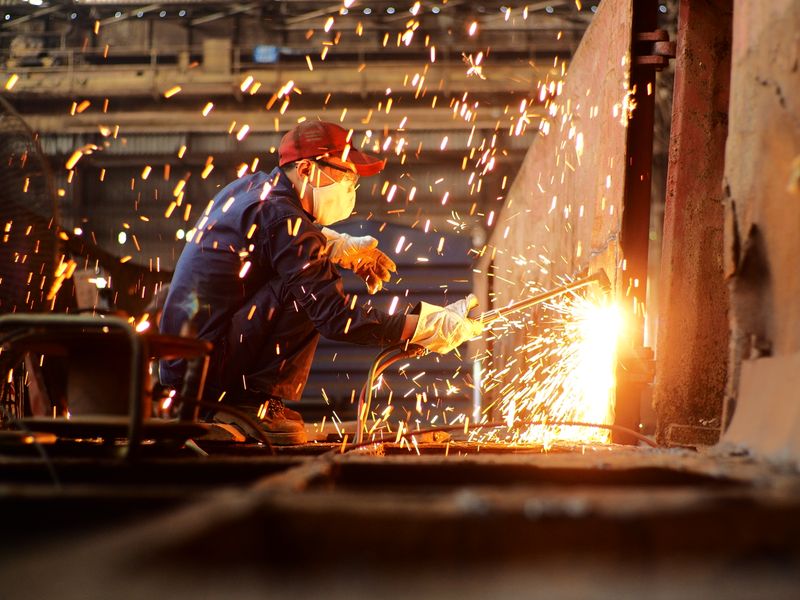
Hot-work permit and fire-watch checklist for welders
A signed hot-work permit does not make a combustible wall cavity, uncleaned tank, or impaired sprinkler system safe. The permit is evidence that a responsible person inspected the work, assigned controls, and authorized a specific task for a specific time and place.
Use this checklist for welding, cutting, brazing, grinding, and other spark- or heat-producing work. It supports the broader practices in the welding safety essentials guide, but it does not replace the employer’s hot-work program, applicable OSHA rule, adopted fire code, NFPA 51B edition, or authority having jurisdiction (AHJ).
First decide: designated, permit-required, or prohibited
Designated hot-work area: A permanent location constructed, maintained, and approved for recurring hot work. The site program may not require a task permit there, but housekeeping, ventilation, PPE, equipment condition, and fire protection still apply.
Permit-required area: A temporary location where hot work is allowed only after inspection, documented precautions, and authorization. The permit should be limited to the identified job, location, shift or time window, and conditions.
Prohibited area: A place where controls cannot make the work acceptable. Under OSHA 29 CFR 1910.252, examples include unauthorized areas, a sprinklered building with impaired protection, explosive atmospheres, and certain areas near exposed readily ignitable material.
If the conditions required for safe work cannot be met, move the work to a designated area, use a cold-work alternative, or postpone it. A permit is not a waiver.
Assign the roles before inspection
Names and responsibilities should be clear:
- Management or property representative: Communicates site hazards and establishes the program.
- Permit-authorizing individual (PAI) or responsible authorizer: Inspects the area, specifies precautions, and grants or denies permission.
- Hot-work operator: Uses approved equipment and follows every permit condition.
- Fire watch: Monitors exposed areas, has suitable extinguishing equipment, knows how to sound the alarm, and performs no distracting task.
- Contractor supervisor: Coordinates workers, the host employer, and permit closeout.
One person may fill more than one role only when the applicable program permits it and the duties can actually be performed. A welder under a hood cannot simultaneously observe every hidden area as an effective fire watch.
Pre-work site inspection
Walk the area with the permit, not from memory.
Combustibles and surfaces
- Move the work to a safer location when practical.
- Remove movable combustibles from the required radius.
- Protect immovable hazards with approved welding blankets, pads, curtains, or metal guards.
- Sweep combustible debris from floors and ledges.
- Check below elevated work for falling slag and sparks.
- Identify combustible construction, insulation, liners, coatings, dust, and residues.
OSHA general-industry provisions use 35 feet (10.7 m) in several combustible and fire-watch criteria. The NFPA hot-work fact sheet likewise describes clearing combustibles within a 35-foot (11 m) radius as one control. Sparks can travel farther, so the authorizer must evaluate actual direction, elevation, wind, process, and site conditions.
Openings and hidden sides
- Cover or guard floor cracks, wall holes, open doors, broken windows, and penetrations.
- Inspect rooms and concealed spaces on the opposite side of floors, walls, ceilings, roofs, and partitions.
- Protect or shut down ducts and conveyors that could carry sparks.
- Station additional fire watches where one person cannot see all exposed areas.
Conducted heat can ignite material on the far side of a metal wall even when no sparks pass through. Include that area on the permit and during post-work monitoring.
Fire protection and emergency readiness
- Confirm automatic sprinklers and alarms are in service.
- Select extinguishers for the actual hazards and make them immediately available.
- Keep exits, access routes, hose stations, and alarm points clear.
- Verify the fire watch is trained in extinguisher limits and alarm procedures.
- Record how workers will summon the site emergency response.
“Extinguisher nearby” is incomplete. Its type, location, inspection status, and operator training all matter.
Equipment and work controls
Inspect leads, electrode holders, torches, hoses, regulators, cylinders, flashback protection where required, grounds, guards, and power connections. Remove defective equipment from service. The equipment maintenance guide provides a practical inspection routine, while the manufacturer manual controls repair and setup.
Also confirm:
- The operator has appropriate helmet shade, eye protection, gloves, clothing, and hearing protection
- Ventilation and fume controls match the base metal, coating, consumable, and location
- Shielding gas cylinders are secured and separated from damage or heat
- Coatings and residues have been identified before heating
- Weather and wind will not spread sparks or defeat shielding and ventilation
Respiratory PPE must follow the employer’s respiratory protection program when required. The welding respirator and fume extractor guide explains why a particulate filter cannot solve an oxygen-deficient or unknown atmosphere.
What the permit should document
A useful hot-work permit records:
- Exact location, equipment, and work description
- Date, start time, expiration, and shift limits
- Operator, contractor, authorizer, and fire-watch names
- Combustible removal and protection steps
- Openings, opposite-side spaces, and additional watch locations
- Fire-protection status and extinguisher location
- Gas testing, ventilation, isolation, or other linked procedures
- Required fire-watch and monitoring durations
- Conditions that cancel the permit
- Stop-work, alarm, closeout, and sign-off steps
Reinspect and reauthorize when conditions change, the permit expires, work moves, alarms or sprinklers become impaired, weather changes spark travel, or the area is left uncontrolled.
Fire-watch duties during hot work
The fire watch should continuously observe every exposed area, including hidden-side locations assigned on the permit. The person must:
- Maintain an unobstructed view or coordinate additional watches.
- Keep suitable fire-extinguishing equipment ready.
- Know the alarm method and emergency contacts.
- Stop work when a permit condition fails.
- Attempt extinguishment only when the fire is clearly within the capacity of the available equipment; otherwise sound the alarm and follow the emergency plan.
Do not assign material handling, phone use, production work, or another duty that competes with watching for fire.
Post-work watch and monitoring
Time requirements are not interchangeable. OSHA 29 CFR 1910.252 requires the fire watch for at least 30 minutes after welding or cutting under the covered conditions. NFPA’s 2021 fact sheet, summarizing the 2019 edition of NFPA 51B, states a minimum 60-minute fire watch and notes that the PAI can require longer. An employer, insurer, adopted code, site, or AHJ may impose more protective requirements.
Use the controlling rule and document the start and end of both active fire watch and any extended monitoring. Recheck:
- Cracks, openings, trenches, and floor levels below
- Opposite sides of walls, floors, ceilings, and roofs
- Combustible dust or debris on ledges
- Ducts, conveyors, insulation, and concealed spaces
- The workpiece, fixtures, scrap, blankets, and nearby containers
Close the permit only after the required period and final inspection are complete.
Confined spaces and containers need separate authorization
Never use a hot-work permit as the sole authorization to weld in a confined space or on a tank, drum, pipe, or container that held a hazardous substance. Those jobs may require entry permits, isolation, cleaning or purging, atmospheric testing, continuous monitoring, ventilation, respiratory protection, communications, attendant and rescue arrangements, and specialized approvals.
Coated metals also need hazard-specific controls. Review the galvanized steel welding guide before heating zinc-coated material, and follow the coating SDS and site industrial-hygiene procedure.
Final go/no-go check
Authorize work only when:
- The area classification and governing requirements are known
- Every combustible, opening, and hidden-side hazard is controlled
- Fire protection is in service and emergency access is clear
- Operators and watches understand their duties
- Equipment, PPE, ventilation, and gas controls are acceptable
- Separate confined-space, container, or atmospheric controls are complete
- Watch and monitoring times are written on the permit
- Conditions that require stop-work are understood
The key takeaway: the permit is a decision record. Its value comes from a competent inspection, enforceable controls, an attentive fire watch, and documented monitoring after the sparks stop.
Sources

The Welder's Guide Editorial Team
Independent trade-focused editorial team