Best Portable Welders for Field Work and On-Site Repairs
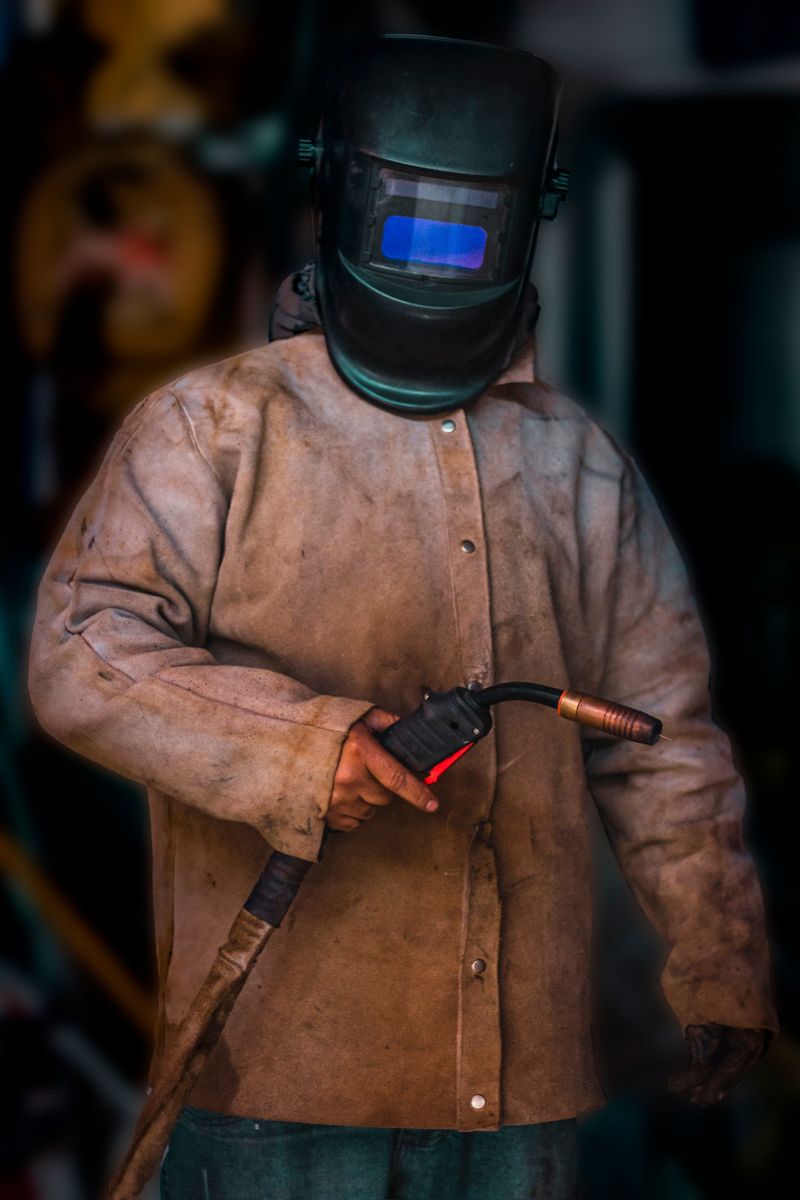
When your welding work takes you away from the shop, you need a machine that is reliable, portable, and capable of handling real-world field conditions. Whether you are doing farm repairs, pipeline maintenance, construction site work, or mobile fabrication, the right portable welder makes the difference between an efficient job and a frustrating one.
This guide covers the three main categories of portable welders, what to look for when choosing one, and specific recommendations at various price points.
Types of Portable Welders
Engine-Driven Welders
Engine-driven welders are the workhorses of field welding. They combine a gasoline or diesel engine with a welding generator, providing both welding power and auxiliary power for tools, lights, and equipment.
Advantages:
- No external power required — completely self-contained
- High output — capable of stick welding with 1/8-inch and 5/32-inch electrodes
- Auxiliary power — run grinders, drills, lights, and other tools simultaneously
- Duty cycle — designed for continuous operation in demanding conditions
Disadvantages:
- Heavy — most weigh 200–500 pounds
- Require fuel and engine maintenance
- Noisy — not suitable for indoor or residential use
- Expensive compared to inverter units
Engine-driven welders are the standard choice for construction sites, pipeline work, and heavy industrial field repairs.
Inverter-Based Portable Welders
Inverter technology has revolutionized portable welding. These machines are lightweight (typically 20–70 pounds), multi-process capable, and can run on standard 120V or 240V power.
Advantages:
- Lightweight and compact — one-person carry
- Multi-process — MIG, TIG, and stick in one machine
- Can run on generator power or standard outlets
- Advanced features like pulse welding and arc force control
Disadvantages:
- Limited by available power supply — need a generator for remote locations
- Lower maximum output compared to engine-driven units
- More sensitive to dust, moisture, and rough handling
- Duty cycle limitations at higher amperages
Inverter welders are ideal for light to medium field work, on-site repairs, HVAC installation, and maintenance welding.
Battery-Powered Welders
The newest category, battery-powered welders use lithium-ion battery packs to provide welding capability with zero need for external power, fuel, or generators.
Advantages:
- Ultra-portable — no cords, no fuel, no generator
- Can weld anywhere, including indoors and in confined spaces
- Silent operation — no engine noise
- Instant start — no warm-up time
Disadvantages:
- Limited welding time per charge (typically 10–30 minutes of arc-on time)
- Lower output — best suited for stick welding with 1/8-inch electrodes or lighter
- High initial cost
- Battery replacement cost over time
Battery-powered welders are best for quick repairs, emergency situations, and locations where no other power is available.
Key Features to Consider
Weight and Portability
Consider how you will transport the welder. If you are loading it into a truck bed by yourself, anything over 50 pounds becomes a challenge. Look for machines with carrying handles or shoulder straps.
Engine-driven units typically require a truck-mounted rack or trailer. Factor in the weight of fuel and accessories when evaluating portability.
Power Output
Match the welder’s output to your typical work:
- Light repairs (1/8-inch rod max): 130–160 amps is sufficient
- Medium fabrication (3/32 to 5/32-inch rod): 160–200 amps
- Heavy field welding (5/32 to 3/16-inch rod): 200–300 amps
- Heavy industrial (multiple welders, heavy rod): 300+ amps
Duty Cycle
Duty cycle indicates what percentage of a 10-minute period the welder can operate at a given amperage without overheating. A 60% duty cycle at 200 amps means you can weld for 6 minutes out of every 10 at that output.
For field work, look for a generous duty cycle at your typical operating amperage. Repairs do not wait for cool-down periods.
Multi-Process Capability
Many modern inverter welders offer MIG, TIG, and stick capability in one unit. If your field work varies, a multi-process machine provides maximum flexibility. If you primarily stick weld, a dedicated stick/TIG inverter may be simpler and more cost-effective.
Power Input Flexibility
Field welders should accept a range of input voltages. Dual-voltage machines that operate on both 120V and 240V give you the most options. If you rely on generator power, verify the welder is compatible with generator output — some inverters are sensitive to the frequency and voltage fluctuations common in generator power.
Top Portable Welder Recommendations
Best Engine-Driven: Lincoln Ranger 330MPX
The Lincoln Ranger 330MPX is a top-tier engine-driven welder delivering up to 330 amps of welding output with multi-process capability. It provides 10,000 watts of auxiliary power and weighs in at roughly 600 pounds — a truck-mounted unit for serious field work. The Chopper technology delivers a smooth stick and TIG arc.
Best Mid-Range Inverter: ESAB Rebel EMP 285ic
The ESAB Rebel EMP 285ic is a dual-voltage (120/240V) multi-process inverter that handles MIG, TIG, and stick welding. At about 55 pounds, it is portable enough for one person to carry. The smart-MIG feature automatically sets wire feed speed and voltage based on material thickness and wire size.
Best Budget Inverter: Hobart Handler 210MVP
For welders who need portability without a premium price, the Hobart Handler 210MVP offers dual-voltage MIG welding in a compact package. It runs on 115V or 230V and produces enough output for light to medium fabrication work.
Best Ultra-Portable: Vulcan OmniPro 220
The Vulcan OmniPro 220 is a multi-process inverter welder that handles MIG, flux-cored, DC TIG, and stick welding. It features dual-voltage input and weighs only 38 pounds, making it one of the lightest full-featured units available.
Best Battery-Powered: Snap-On EEWH312A
For truly cordless welding, the Snap-On battery-powered stick welder uses the same lithium-ion batteries as their power tools and can run 1/8-inch electrodes for emergency repairs. While the arc-on time is limited, the ability to weld anywhere with no setup makes it invaluable for maintenance teams.
Essential Field Welding Accessories
A portable welder is only as useful as the accessories you carry with it. Pack these essentials for any field job:
- Extension cables — At minimum, carry 50 feet of welding cable and a ground clamp with 50 feet of lead
- Generator — For inverter welders, a 7000-watt or larger generator provides reliable field power
- Angle grinder — For preparation and cleanup
- Chipping hammer and wire brush — For stick welding slag removal
- Welding lenses and safety gear — Carry spares; you cannot afford to stop working because a lens cracked
- Assorted electrodes — Keep a selection of E6010, E6011, E6013, and E7018 in a dry container
- Portable welding cable kit — Pre-made leads with connectors save time on setup
Field Welding Best Practices
Prepare the Joint Thoroughly
Field conditions rarely provide the clean, prepared joints you get in a shop. Take the time to grind away paint, rust, scale, and contamination from the weld area. A clean joint is especially critical when using low-hydrogen electrodes like E7018.
Manage Wind and Weather
Wind blows away shielding gas, making MIG and TIG welding outdoors impractical in anything over 5 mph. For outdoor field welding, stick welding (SMAW) or flux-cored welding (FCAW) are your best options because the flux provides self-shielding.
If you must MIG weld outdoors, set up wind breaks with tarps or panels.
Secure Your Work Area
Ensure your workpiece is properly grounded and secured before welding. In the field, you may be welding on equipment that is not conveniently positioned. Use chain falls, jacks, or blocking to get the joint in a comfortable welding position whenever possible.
Protect Your Equipment
Inverters are sensitive to moisture and dust. Keep your welder covered when not in use and avoid setting it directly on wet ground. Engine-driven units need regular oil changes, air filter cleaning, and fuel system maintenance to stay reliable in the field.
Key Takeaways
The best portable welder for field work depends on your power situation, the type of welding you do, and your budget. Engine-driven welders provide maximum power and independence for heavy construction and pipeline work. Inverter welders offer the best balance of portability, versatility, and performance for most on-site repair and maintenance applications. Battery-powered welders fill the niche of emergency repairs where no other power source is available. Choose the category that matches your typical workload, invest in quality accessories, and maintain your equipment to ensure reliable performance in the field.
Related Articles
For outdoor field work where gas shielding is impractical, understanding your wire options is essential — flux-cored vs. solid wire explains why self-shielded flux-cored wire is the go-to choice for windy job sites. Regardless of the machine you choose, protecting yourself starts with the right gear — our welding safety essentials guide covers PPE and best practices for field conditions. To keep your portable equipment running reliably, follow the maintenance schedule in how to maintain your welding equipment.

The Welder's Guide Editorial Team
Independent trade-focused editorial team