Welding Schools and Training Programs: How to Get Started
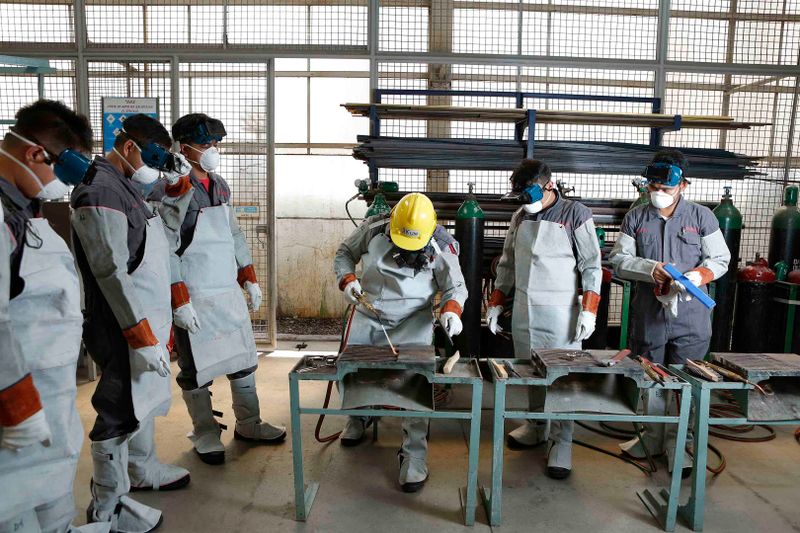
Welding Schools and Training Programs: How to Get Started
Welding is one of the best paths into a high-paying skilled trade. Unlike many professional fields, you do not need a four-year degree, a six-figure student loan, or years of unpaid internships. A welding certificate or associate degree from a community college can be completed in 6–24 months, costs $3,000–$15,000 total, and launches you directly into a career with strong earning potential.
This guide compares the welding training options available and helps you find the right path for your goals and situation.
Why Welding Training Matters
Self-taught welders exist, but there are real limitations to learning entirely on your own:
- Without formal training, you often don’t know what you don’t know
- Developing safe habits from the start is much easier than unlearning unsafe ones
- Employers prefer trained welders, especially for certified work
- Certification testing requires structured preparation
- Many specialized processes (pipe welding, TIG, exotic metals) are difficult to learn without supervision
A structured training program compresses years of self-learning into months and gives you the credential to prove your skills to employers.
Training Path Options
1. Community College Welding Programs
Duration: 6 months (certificate) to 2 years (associate degree) Cost: $2,000–$8,000 total (often much less with financial aid or Pell Grant eligibility) Schedule: Day, evening, and weekend classes available at most schools
Community colleges offer the best overall value in welding education. Programs typically cover:
- Welding safety and OSHA standards
- MIG, TIG, and stick welding
- Blueprint reading
- Metal preparation and finishing
- Basic metallurgy
- AWS welding qualification preparation
Certificate programs (typically 2–4 semesters) prepare students for entry-level welding jobs and AWS D1.1 performance qualification tests.
Associate of Applied Science (AAS) programs in Welding Technology add additional coursework in mathematics, technical communication, and often specialty processes (pipe welding, aluminum, stainless). The AAS opens doors to quality inspection, welding supervision, and CWI career paths.
How to find programs: The American Welding Society maintains a school locator at aws.org/education. Search by state and ZIP code.
Financial aid: Federal Pell Grants (up to $7,395/year for eligible students), state grants, and institutional scholarships frequently cover all or most tuition for community college welding programs. FAFSA application is required.
2. Private Welding Schools
Duration: 7 weeks to 12 months, depending on program intensity Cost: $5,000–$20,000+ (varies significantly by school and program length) Schedule: Full-time, intensive schedules
Private vocational welding schools compress training into shorter, full-time programs. Examples:
- Hobart Institute of Welding Technology (Troy, Ohio) — One of the oldest and most respected welding schools in the country. Certificate programs from 7–13 weeks.
- Lincoln Electric Welding School (Cleveland, Ohio) — Programs ranging from 3-day seminars to full certificate programs.
- Tulsa Welding School (Tulsa, OK; Jacksonville, FL) — Larger for-profit school with multiple locations.
- Texas State Technical College — Well-regarded technical programs in Texas.
Pros of private schools:
- Faster completion (7–26 weeks versus 1–2 years at community college)
- Full-time immersive training
- Some have strong industry employer relationships and placement assistance
- Nationally recognized names (Hobart, Lincoln Electric) carry weight on a resume
Cons:
- Higher tuition than community college
- Less financial aid availability (some are not Title IV eligible)
- Shorter programs may not cover all processes
Evaluate private schools carefully. Ask about:
- Graduation rates
- Job placement rates and employer partnerships
- Whether the school is accredited (programmatic or regional accreditation matters for financial aid eligibility)
- Any Title IV (federal financial aid) eligibility
3. Union Apprenticeship Programs
Duration: 3–5 years (earn while you learn) Cost: Little to nothing (apprentices are paid while training) Eligibility: Varies by union and local; some require welding prerequisites
Union apprenticeships are the highest-quality, best-compensated path into welding, but they are also the most selective and slowest to enter.
Primary welding-related unions:
- United Association of Plumbers and Steamfitters (UA) — Local 798 specifically covers pipeline welders. The UA also covers pipefitters, sprinkler fitters, and plumbers with welding as part of the trade.
- International Association of Bridge, Structural, Ornamental and Reinforcing Iron Workers — Covers structural steel welding in construction.
- International Brotherhood of Boilermakers — Covers industrial construction, power plants, and pressure vessel fabrication.
- Sheet Metal Workers International Association — Covers HVAC ductwork, architectural sheet metal, and some specialty welding.
Apprenticeship structure:
- Apprentices work full-time for a signatory contractor at a percentage of journeyman wage (typically 55–75% starting, scaling up to 90% or more by the final year)
- Attend related technical training (classroom) simultaneously
- Progress through structured competency milestones
- Receive full journeyman benefits (health insurance, pension, annuity) in most programs
How to apply: Contact your regional union hall directly. Applications are typically accepted during open enrollment periods. Most apprenticeship programs conduct aptitude testing and interviews.
The realistic timeline: Union apprenticeship wait lists can be significant (months to years in high-demand markets). Completing a community college program first can improve your apprenticeship application and potentially reduce your apprenticeship duration.
4. Employer On-the-Job Training (OJT)
Many employers — particularly in manufacturing, automotive, and agricultural welding — hire entry-level welders and provide on-the-job training. Starting pay is lower, but there is no training cost and you are earning income from day one.
Best path to OJT:
- Complete a basic community college certificate or AWS SENSE (Schools Excelling through National Skills Education) program
- Apply as a “trainee welder” or “production welder” with welding background
- Use the employment opportunity to build skills toward certification
5. AWS SENSE Programs
The AWS SENSE (Schools Excelling through National Skills Education) program is a curriculum and credentialing framework that AWS offers to schools. SENSE Level I and II credentials document student achievement against AWS training standards.
SENSE credentials are not the same as welder performance qualifications (certification tests), but they document structured training completion in a recognized format that employers understand.
If your school participates in AWS SENSE, completing the program gives you an additional credential to show employers.
What Training Programs Cover
A comprehensive welding program includes:
Safety:
- OSHA 10 or 30 Hour General Industry certificate
- Hazardous materials handling (fumes, compressed gases, fire)
- Personal protective equipment selection and use
- Shop safety and fire prevention
Welding Processes:
- SMAW (stick) — fundamentals, electrode selection, all positions
- GMAW (MIG) — solid wire and flux-cored
- GTAW (TIG) — DC and AC, steel and aluminum
- OFW (oxy-fuel) — cutting and brazing
Theory:
- Metallurgy (what happens to metal when welded)
- Joint design and fit-up
- Distortion and distortion control
- Reading welding blueprints and symbols
Quality and Inspection:
- Visual inspection of welds
- Introduction to NDT methods
- AWS D1.1 acceptance criteria
Advanced (in longer programs):
- Pipe welding (2G, 5G, 6G)
- Stainless steel welding
- Aluminum welding
- Specialty processes
AWS Certification During Training
Many welding programs include preparation for and testing toward AWS welding performance qualifications:
- 3G and 4G (vertical and overhead) groove weld qualifications in SMAW or GMAW are typical certifications from a one-year program
- Pipe welding qualifications (5G or 6G) from programs with pipe welding emphasis
Graduating with current AWS performance qualifications significantly improves employment prospects.
Cost Comparison Summary
| Training Path | Duration | Cost | Pay During Training |
|---|---|---|---|
| Community college certificate | 1–2 semesters | $2,000–$8,000 | No |
| Community college AAS degree | 4–5 semesters | $5,000–$12,000 | No |
| Private welding school | 7–26 weeks | $8,000–$20,000 | No |
| Union apprenticeship | 3–5 years | Free (or low cost) | Yes — 55–90% of journeyman scale |
| Employer OJT | Ongoing | Free | Yes — entry wage |
Questions to Ask Before Enrolling
For any school or program:
- What is the graduation rate?
- What percentage of graduates find welding employment within 6 months?
- Which AWS certifications does the program prepare students for?
- Are instructors AWS Certified Welding Educators (CWE) or Certified Welding Inspectors (CWI)?
- What equipment does the school use? (Modern inverter machines vs. outdated transformer machines)
- Does the school offer job placement assistance?
- Is the program eligible for federal financial aid (Pell Grant, student loans)?
For union apprenticeship programs:
- What is the current wait time for entry?
- What is the base starting wage?
- What contractors does this Local work with?
- What certifications will I hold upon completing the apprenticeship?
Getting Started Today
While researching programs:
- FAFSA: If you might attend a community college or accredited school, complete the FAFSA (Free Application for Federal Student Aid) at studentaid.gov. You may qualify for grants that cover full tuition.
- AWS: Create a free account at aws.org. Explore the Education section for school listings, SENSE information, and scholarship opportunities.
- Union Halls: Contact your nearest Iron Workers, UA, or Boilermakers local union and ask about apprenticeship openings and application requirements.
- Visit schools in person: Tour the welding lab, look at the equipment, and talk to instructors and current students before committing.
Welding training is an investment with one of the best returns available in trade education — a six-figure career ceiling, genuine job security, and work you can point to with your hands.

The Welder's Guide Editorial Team
Independent trade-focused editorial team