Welding Consumables Guide: Wire, Electrodes, Rods, and Flux
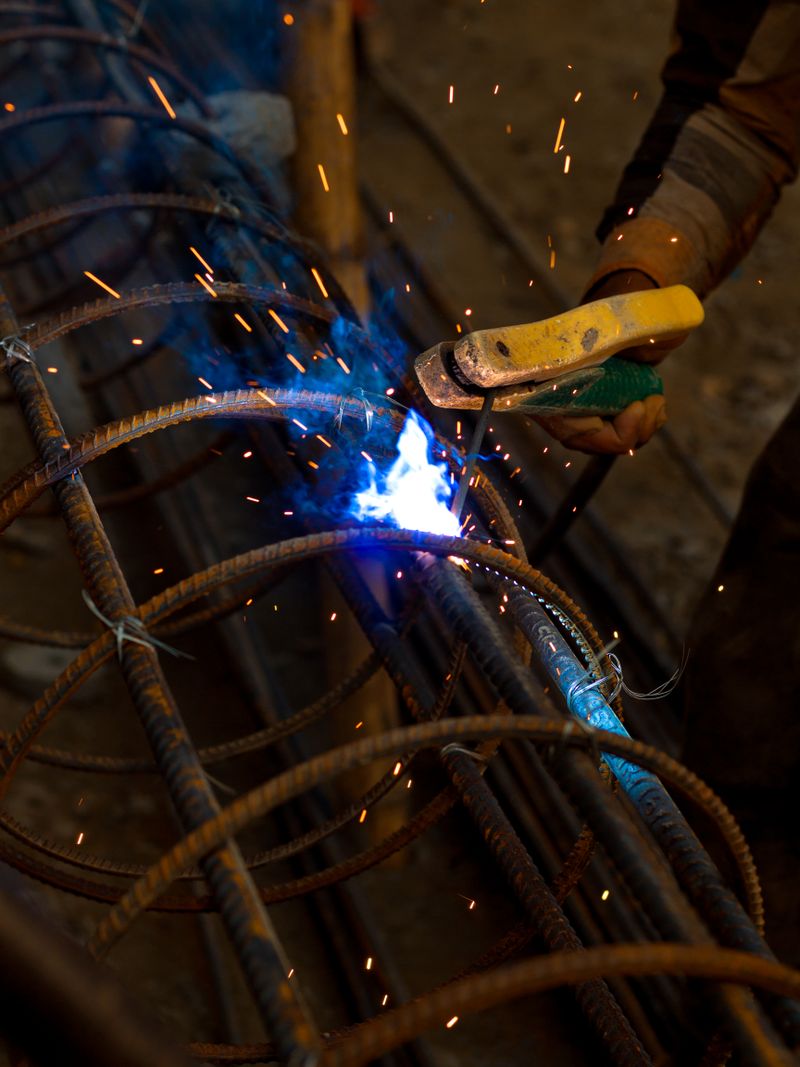
Welding Consumables Guide: Wire, Electrodes, Rods, and Flux
Welding consumables — the materials consumed during the welding process — account for a significant portion of welding operating costs and directly determine weld quality. Choosing the wrong filler metal or electrode can result in failed welds, porosity, cracking, or inadequate mechanical properties.
This guide covers every major category of welding consumable and how to select the right one for your application.
MIG Wire (GMAW Solid Wire)
Classification System: AWS A5.18
MIG wire for carbon steel is classified per AWS A5.18. The most common designation is ER70S-X:
- E — Electrode
- R — Rod (also usable as TIG filler)
- 70 — Minimum tensile strength of deposited weld metal (70,000 psi)
- S — Solid wire
- X — Chemical composition grade (2, 3, 6, or 7)
ER70S-3 vs. ER70S-6: What’s the Difference?
ER70S-3 — Lower silicon and manganese content. Works best on clean base metal. Less deoxidizing power. Less commonly used in general fabrication.
ER70S-6 — Higher silicon (0.80–1.15%) and manganese (1.40–1.85%) content. The additional deoxidizers handle mill scale, light rust, and surface contamination better than S-3. This is the standard choice for most MIG welding on carbon steel.
Why ER70S-6 is preferred:
- Better puddle fluidity and bead appearance
- Better tolerance of contaminated or rusty base metal
- Widely available in every diameter
Recommended: Lincoln Electric ER70S-6 .030” MIG Wire — 11 lb spool, feeds smoothly and consistently.
Wire Diameter Selection
| Material Thickness | Wire Diameter | Notes |
|---|---|---|
| 24–18 gauge | 0.023” | Thin sheet metal only |
| 18 gauge–3/16” | 0.030” | Most common home shop size |
| 3/16”–3/8” | 0.035” | Standard production size |
| 3/8”+ | 0.045” | Heavy fabrication |
Stainless Steel MIG Wire
AWS classification: ER3XX-Si (where XX is the alloy number)
- ER308L-Si — For welding 304/304L stainless steel. Most common stainless MIG wire.
- ER309L-Si — For joining stainless steel to carbon steel (dissimilar metal welds).
- ER316L-Si — For 316/316L stainless steel; molybdenum content improves pitting resistance.
The “L” designation indicates low carbon content, which minimizes sensitization in the HAZ. Always use L-grade stainless filler for welded applications that will be in service.
Recommended: Blue Demon ER308L-Si stainless MIG wire
Aluminum MIG Wire
- ER4043 — Aluminum-silicon alloy. Lower strength, better flow, good for most general aluminum MIG applications. Produces softer, more crack-resistant deposits.
- ER5356 — Aluminum-magnesium alloy. Higher strength, better corrosion resistance, better for structural aluminum. Standard for marine and structural aluminum.
Require a push-pull gun system for aluminum MIG wire — the soft aluminum wire cannot be pushed 12+ feet through a standard MIG gun liner.
Recommended: Hobart ER5356 Aluminum MIG Wire
Flux-Cored Wire (FCAW)
Flux-cored wire has a tubular construction — the wire is a steel tube filled with flux. The flux provides shielding, deoxidizing agents, and arc stabilizers.
FCAW-G (Gas-Shielded Flux-Cored Wire)
Requires external shielding gas (typically 75/25 Ar/CO2 or 100% CO2). Produces higher quality welds than self-shielded and is used in shop environments.
E71T-1C — All-position, CO2 shielded. High deposition, smooth bead. Standard in structural fabrication shops. E71T-1M — Same as 71T-1C but formulated for mixed gas (75/25). E71T-12 — All-position, lower hydrogen, improved impact toughness.
Classification: E71T-1C where:
- E — Electrode
- 7 — 70,000 psi tensile strength
- 1 — All-position (0 = flat/horizontal only)
- T — Tubular (flux-cored)
- 1 — Flux type designation
- C — CO2 shielding (M = mixed gas)
Recommended: Lincoln Electric Innershield NR-211-MP .035” — self-shielded all-position wire for field use.
FCAW-S (Self-Shielded Flux-Cored Wire)
No external gas required. Used for outdoor construction welding where gas coverage is difficult.
E71T-8 — Self-shielded, all-position, low hydrogen. Common for structural steel field welding. E71T-11 — Self-shielded, all-position. Simpler chemistry, widely available.
Important: Self-shielded flux-core produces more fume than gas-shielded processes. Use adequate ventilation.
Stick Electrodes (SMAW)
Stick electrodes (covered electrodes) have a steel core rod coated with flux. The flux provides shielding gas, slag, and deoxidizers during welding.
AWS Classification: E7018
The four- or five-digit classification code tells you everything:
| Code | Meaning |
|---|---|
| E | Electrode |
| 70 | 70,000 psi minimum tensile strength |
| 1 | Usable in all positions (2 = flat/horizontal only) |
| 8 | Coating type and current |
Last digit meanings:
- 0 — High cellulose sodium, DCEP only
- 1 — High cellulose potassium, AC/DC
- 8 — Iron powder, low hydrogen, AC/DC/DCEP
Common Stick Electrodes
E6010 — High cellulose sodium. Deep penetrating arc. DC positive (DCEP) only. The pipeline root pass electrode. Excellent on rusty/dirty metal. Fast-freeze slag. Used for root passes, thin metal, and outdoor work.
E6011 — High cellulose potassium. Similar to E6010 but runs on AC and DC. More accessible for machines without DC output.
E6013 — Rutile coating. Medium penetration, stable arc, smooth bead. Easy to strike and restrike. The beginner-friendly electrode. Good for sheet metal and general-purpose work.
E7018 — Iron powder, low hydrogen. Low hydrogen content reduces cracking risk. Strong, ductile welds. The structural steel electrode. Requires dry storage in a rod oven. Used for structural welds, pressure vessels, and certification testing.
E7018-1 — Same as E7018 but with higher ductility. Used for seismic connections.
E8018-C3 and E9018-G — Higher strength electrodes for high-strength steel. Required when base metal yield strength exceeds what E7018 can match.
Low hydrogen electrode storage: E7018 absorbs moisture from the air, which causes hydrogen cracking. Store opened packages in a welding rod oven at 250–300°F. Recondition exposed electrodes at 600°F for 1 hour.
Recommended: Lincoln Electric Excalibur 7018 MR — moisture-resistant coating, stores better than standard E7018.
Stainless Stick Electrodes
E308L-16 — For 304/304L stainless steel. AC/DC. E316L-16 — For 316/316L stainless steel. AC/DC. E309L-16 — For joining stainless to carbon steel.
Nickel Alloy Stick Electrodes
ENi-CI — Pure nickel electrode for cast iron welding. ENiFe-CI — Nickel-iron electrode for cast iron. Stronger, more weldable deposit. ENiCrFe-3 (Inconel 182) — For Inconel and high-nickel alloy welding.
TIG Filler Rods (GTAW Filler)
TIG filler rods are solid, uncoated rods fed manually into the TIG arc. Stored in cardboard tubes, sold by pound.
Carbon Steel TIG Filler
ER70S-2 — Triple-deoxidized (aluminum, titanium, zirconium). Excellent for pipe root passes and welding through light scale. The pipe welding standard. ER70S-6 — Same composition as MIG wire version. More deoxidizers than S-2 but S-2 is standard for TIG.
Recommended: Harris ER70S-2 TIG filler rod
Stainless Steel TIG Filler
Same classifications as MIG wire: ER308L, ER309L, ER316L. Same L-grade rule applies.
Aluminum TIG Filler
4043 — General purpose. Lower strength, better hot-cracking resistance, better flow. Common for automotive and HVAC. 5356 — Higher strength, better corrosion resistance. Standard for marine and structural aluminum.
Recommended: Harris 4043 Aluminum TIG Rod
Titanium TIG Filler
ERTi-2 — For Grade 1 and Grade 2 commercially pure titanium. ERTi-5 — For Grade 5 Ti-6Al-4V alloy.
Nickel Alloy TIG Filler
ERNiCrMo-3 (Alloy 625) — Versatile filler for Inconel 625 and as an overmatching filler for other nickel alloys. ERNiCu-7 — For Monel alloys.
Shielding Gas: The Invisible Consumable
Shielding gas is technically a consumable that often gets overlooked:
| Process | Gas | Notes |
|---|---|---|
| MIG — carbon steel | 75/25 Ar/CO2 | Standard choice |
| MIG — stainless | 90/10 Ar/CO2 or tri-mix | Lower CO2 reduces carbon pickup |
| MIG — aluminum | 100% Argon | No CO2 or O2 for aluminum |
| TIG — all metals | 100% Argon | Standard; He blends for more heat |
| TIG — titanium | 100% UHP Argon (99.999%) | No contamination |
| Flux-core (gas-shielded) | 75/25 Ar/CO2 or 100% CO2 | Per wire spec |
A quality argon/CO2 regulator with flow meter is essential for consistent gas flow and consumable efficiency.
Consumable Storage and Quality
- Stick electrodes: Store sealed. Low-hydrogen types in a rod oven.
- MIG wire: Reseal open spools. Wire oxidation increases contact tip wear and spatter.
- TIG filler: Store in sealed tubes. Contaminated filler rod causes porosity.
- Flux-cored wire: Keep away from moisture. Self-shielded wires are moisture sensitive.
Using quality, properly stored consumables is the baseline for consistent weld quality. No technique improvement can compensate for corroded wire or wet electrodes.
2026 decision refresh
Quick decision: consumables should match base metal, process, joint preparation, position, shielding gas, and inspection expectations. Buying the cheapest wire, rods, cups, or tungsten often costs more through wasted practice time and rejected welds.
| Consumable choice | Check before welding | Failure it helps prevent |
|---|---|---|
| MIG wire | Diameter, gas mix, base metal, and drive-roll match | Burnback, spatter, poor fusion |
| Stick electrode | AWS classification, storage, amperage, and position | Porosity, cracking, slag inclusions |
| TIG tungsten | Type, diameter, grind, and amperage range | Arc wander and contamination |
| Contact tips and liners | Wire diameter and wear condition | Erratic feed and inconsistent arc length |
| Filler rod | Alloy compatibility and cleanliness | Weak or crack-prone joints |
Safety source note: OSHA identifies welding fumes, UV radiation, burns, eye damage, shock, and other hazards. Consumable selection improves weld quality, but ventilation, PPE, hot-work controls, and material-specific hazards still control whether the job is safe.
Related tool and guides
- Weld defect glossary and troubleshooting worksheet - connect visible defects to likely consumable, setup, or technique causes.
- Understanding welding electrode classifications - decode stick and filler markings.
- MIG welding settings chart - pair wire size with voltage, wire speed, and material thickness.
- How to reduce welding spatter - troubleshoot one of the most common consumable-related complaints.
Build consumables into a complete welding estimate
Use these related resources to connect filler metal, gas, labor, defects, and safety overhead before quoting a job.
- Welding job cost calculator
Estimate materials, consumables, shielding gas, labor, overhead, contingency, and margin.
- Welding gas tank sizes and costs
Add cylinder and gas-use assumptions to consumable planning.
- Common welding defects
Account for rework, inspection, and prep issues that affect consumable use.
- Weld defect glossary
Document defect observations separately from job-pricing assumptions.
- Flux-cored vs. solid wire
Match filler choice to shielding, cleanup, portability, and data-sheet requirements.
- Welding equipment maintenance
Keep liners, tips, nozzles, electrodes, and consumable storage tied to preventive care.

The Welder's Guide Editorial Team
Independent trade-focused editorial team