Weld Inspection and Testing Methods: VT, UT, RT, MT, and PT
Weld Inspection and Testing Methods: VT, UT, RT, MT, and PT
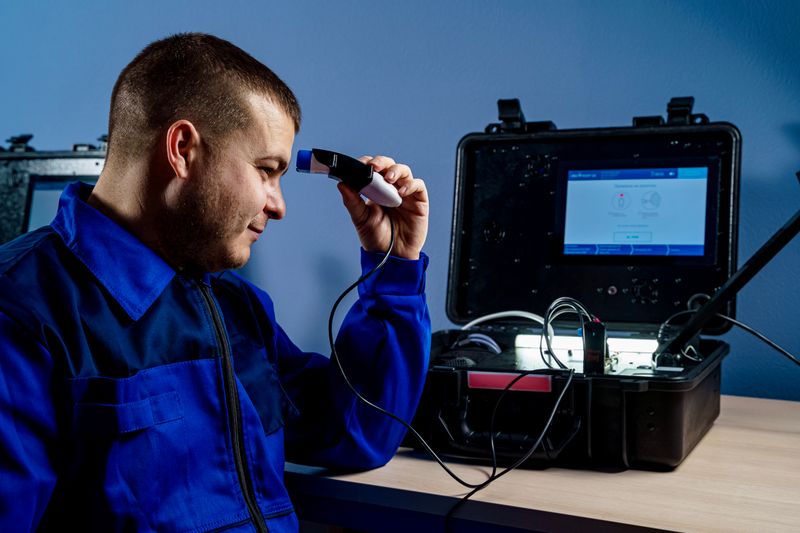
Every weld contains potential defects — discontinuities that may or may not affect service performance. Weld inspection and testing is the systematic process of finding and evaluating those discontinuities against the acceptance criteria defined by the applicable welding code. The goal is to ensure welds meet the requirements of the job before they go into service, not after a failure occurs.
Understanding inspection methods matters whether you are a welder trying to understand what is being checked, a fabricator selecting the right inspection for your application, or someone considering a career as a Certified Welding Inspector (CWI).
Why Weld Inspection Matters
A bridge gusset plate weld that contains an undetected crack can fail catastrophically under service load. A pressure vessel weld with embedded porosity can rupture. A pipeline weld with inadequate root fusion can fail from internal corrosion at the unfused zone. These are not hypothetical scenarios — weld failures with catastrophic consequences have occurred in all of these applications.
Inspection requirements are not bureaucratic obstacles — they are engineering safeguards calibrated to the risk of the application. The more critical the application, the more rigorous the inspection.
Types of Discontinuities in Welds
Inspection looks for these common weld discontinuities:
Surface discontinuities (visible with VT, MT, PT):
- Cracks (surface-breaking)
- Undercut — groove at the weld toe where base metal is thinned
- Overlap — weld bead rolled onto base metal without fusion
- Porosity — gas pockets at the surface
- Arc strikes — damage outside the intended weld zone
- Excess convexity or concavity
Internal discontinuities (require volumetric inspection — RT or UT):
- Embedded porosity — gas pockets inside the weld
- Slag inclusions — trapped flux or oxide in the weld metal
- Incomplete fusion — lack of bond between weld and base metal, or between passes
- Incomplete penetration — root of groove weld not fused
- Cracks (subsurface or embedded)
- Tungsten inclusions (TIG welding specific)
Visual Testing (VT)
What it is: Direct examination of the weld with the naked eye, a magnifying glass, and measurement tools.
What it finds: Surface discontinuities — undercut, overlap, cracks, porosity at the surface, weld size, profile, and length.
When used: VT is performed on virtually every weld as the baseline inspection. It is specified as a minimum requirement in all welding codes. VT precedes all other inspection methods.
Requirements:
- Adequate lighting (minimum 50 foot-candles at the inspection surface, per AWS D1.1; 100 fc preferred)
- Eye within 24 inches of the inspection surface at no more than 30 degrees from the surface
- Weld cleaned of spatter, slag, and debris before inspection
Measurement tools used in VT:
- Welding gauge (HILO gauge, Camber gauge) — measures weld size, throat, leg, convexity, concavity, undercut depth, and more. The Weld Gauge Set is the standard for field use.
- Fillet gauge — checks fillet weld leg size against specified minimum
- Ruler and tape measure — for weld length verification
- Mirror and flashlight — for weld areas with limited direct visibility
CWI use: Certified Welding Inspectors perform and document VT results. VT is the most important inspection method because it is universal and no other method substitutes for a thorough visual examination.
Limitations: VT finds only surface-breaking discontinuities. Internal defects require additional methods.
Magnetic Particle Testing (MT / MPI)
What it is: A magnetic field is applied to the weld area. Fine iron particles (dry powder or wet suspension) are applied to the surface. Magnetic flux leaks from discontinuities attract and hold the iron particles, making them visible.
What it finds: Surface and slightly subsurface cracks, linear discontinuities, and laminations. More sensitive than VT for tight surface cracks.
When used: Structural steel welds on tension members, pipe welds, fabricated components. Required by AWS D1.1 for certain connection types in seismic applications.
Requirements:
- Ferromagnetic material only (works on iron and steel, NOT on austenitic stainless steel, aluminum, copper, or titanium)
- Two perpendicular magnetization directions required to detect all crack orientations
- Post-inspection demagnetization may be required
Equipment:
- Yoke (portable electromagnet) for field use
- Magnetic particle powder or bath
- UV (black) light for fluorescent particle inspection
The Olympus/NDT Solutions MT yoke is a standard portable MT instrument. Magnaflux MT powder is widely used.
Limitations: Only works on ferromagnetic materials. Does not detect deep internal defects.
Dye Penetrant Testing (PT / LPI)
What it is: A colored or fluorescent dye is applied to the clean weld surface and allowed to penetrate into any surface-opening discontinuities by capillary action. Excess penetrant is removed, and a developer is applied that draws the penetrant back out of any discontinuities, making them visible as colored or glowing indications.
What it finds: Surface-breaking cracks, porosity, and cold lap. Similar sensitivity to MT for surface discontinuities.
When used: Any material — particularly non-ferromagnetic materials (aluminum, stainless steel, titanium, copper, brass) where MT cannot be used.
Process:
- Clean the surface completely — remove all paint, scale, oil, and contamination
- Apply penetrant — spray or brush; allow dwell time (typically 10–20 minutes)
- Remove excess penetrant — wipe or rinse per penetrant type
- Apply developer — spray or brush; allow development time (typically 5–10 minutes)
- Inspect — visible penetrant indications appear red (visible dye) or glow (fluorescent)
Kit recommendation: Magnaflux SKD-S2 dye penetrant kit — three-can set (cleaner, penetrant, developer) for visible red dye inspection.
Limitations: Surface-opening discontinuities only. Material must be thoroughly cleaned before inspection — embedded contamination gives false indications.
Radiographic Testing (RT / X-Ray)
What it is: X-rays or gamma rays are passed through the weld and recorded on film or digital detector. The image shows internal features — dense metal appears dark, less-dense areas (porosity, cracks, voids) appear lighter.
What it finds: Internal porosity, slag inclusions, incomplete fusion, incomplete penetration, and some cracks. Provides a permanent image record of internal weld quality.
When used: Pipeline welds (ASME Section IX, API 1104), pressure vessel welds (ASME Section VIII), aerospace welds, nuclear welds. The primary inspection method where x-ray quality welds are required.
Equipment:
- X-ray tube (electric) or gamma ray source (Iridium-192, Cobalt-60)
- Film cassette or digital flat-panel detector
- Image quality indicators (IQI / penetrameters)
- Processing equipment (for film)
Exposure and safety: Radiographic inspection is performed only by trained Level II or III RT inspectors. Radiation safety controls (personnel monitoring, area clearance, exposure time limits) are mandatory. Unauthorized use of X-ray or gamma sources is illegal.
Limitations:
- Cannot detect planar discontinuities oriented parallel to the X-ray beam direction (laminar cracks or delaminations may be missed)
- Radiation safety requirements make it more complex in field environments
- More expensive than other methods
- Film requires processing and storage
Ultrasonic Testing (UT)
What it is: High-frequency sound waves (typically 1–10 MHz) are transmitted into the weld through a transducer. Sound reflects from internal boundaries (defects, back wall). The time-of-flight and amplitude of reflected signals indicate the location, size, and orientation of internal discontinuities.
What it finds: Internal defects including cracks, incomplete fusion, incomplete penetration, porosity, and slag inclusions. UT is particularly sensitive to planar defects (cracks, lack of fusion) that RT may miss.
When used: Structural steel welds (CJP groove welds per AWS D1.1), pressure piping (ASME Section IX), thick-section material, and wherever volumetric inspection without radiation is preferred.
Equipment:
- Ultrasonic flaw detector (instrument)
- Search units (transducers) — straight beam and angle beam
- Couplant (gel) to ensure acoustic contact
Phased Array Ultrasonic Testing (PAUT): An advanced variant using electronically steered arrays of transducers that can sweep the sound beam through a range of angles, providing faster coverage and more detailed imaging than conventional UT. Increasingly replacing conventional UT in pipeline and structural applications.
Limitations: Complex interpretation requiring experienced inspectors. Not practical on very thin material (under 1/4”). Does not provide a film record (though PAUT produces digital data records).
Comparing Inspection Methods
| Method | Detects | Material | Cost | Speed |
|---|---|---|---|---|
| VT | Surface only | All | Very low | Fast |
| MT | Surface + near-surface | Ferromagnetic only | Low | Fast |
| PT | Surface only | All | Low | Moderate |
| RT | Internal (full volume) | All | High | Moderate |
| UT | Internal (full volume) | Most | High | Moderate |
Weld Inspector Certification
AWS CWI (Certified Welding Inspector)
The AWS CWI is the primary inspection credential. CWIs are qualified to perform and document VT, MT, and PT inspections, and to interpret and apply welding codes. They also oversee and interpret RT and UT inspection results (performed by Level II/III NDT inspectors).
CWI requirements: Combination of education and welding experience, plus passing a three-part examination. See the AWS CWI program at aws.org.
ASNT Levels I, II, and III (NDT)
The American Society for Nondestructive Testing (ASNT) administers certification for each NDT method:
- Level I — Can perform specific inspection tasks under supervision
- Level II — Can perform and interpret inspections
- Level III — Can develop and approve procedures, train Level I/II
Separate certifications exist for each method (UT Level II, RT Level II, MT Level II, etc.). Many NDT professionals hold multiple method certifications.
The combination of AWS CWI and ASNT Level II certifications in one or more methods makes an inspector highly marketable in construction, pipeline, aerospace, and industrial fabrication.
Building Your Inspection Toolkit
For welders and CWIs performing field inspection:
- Welding gauge: Weld Gauge Set — covers all standard VT measurements
- Magnifying glass: 5x magnification for close crack examination
- Flashlight: High-lumen, focused beam for illuminating weld toes
- MT yoke: Magnaflux Y-8 yoke with AC/DC capability
- PT kit: Magnaflux SKD-S2
- UV lamp: For fluorescent MT or PT indication reading
- Current D1.1 code book: Essential reference for acceptance criteria
Weld inspection is one of the most intellectually satisfying careers in the welding world — combining technical knowledge of welding processes, metallurgy, and non-destructive testing with the responsibility of certifying that structures are safe for their intended use.

The Welder's Guide Editorial Team
Independent trade-focused editorial team