Multi-Process Welders: Are They Worth It?
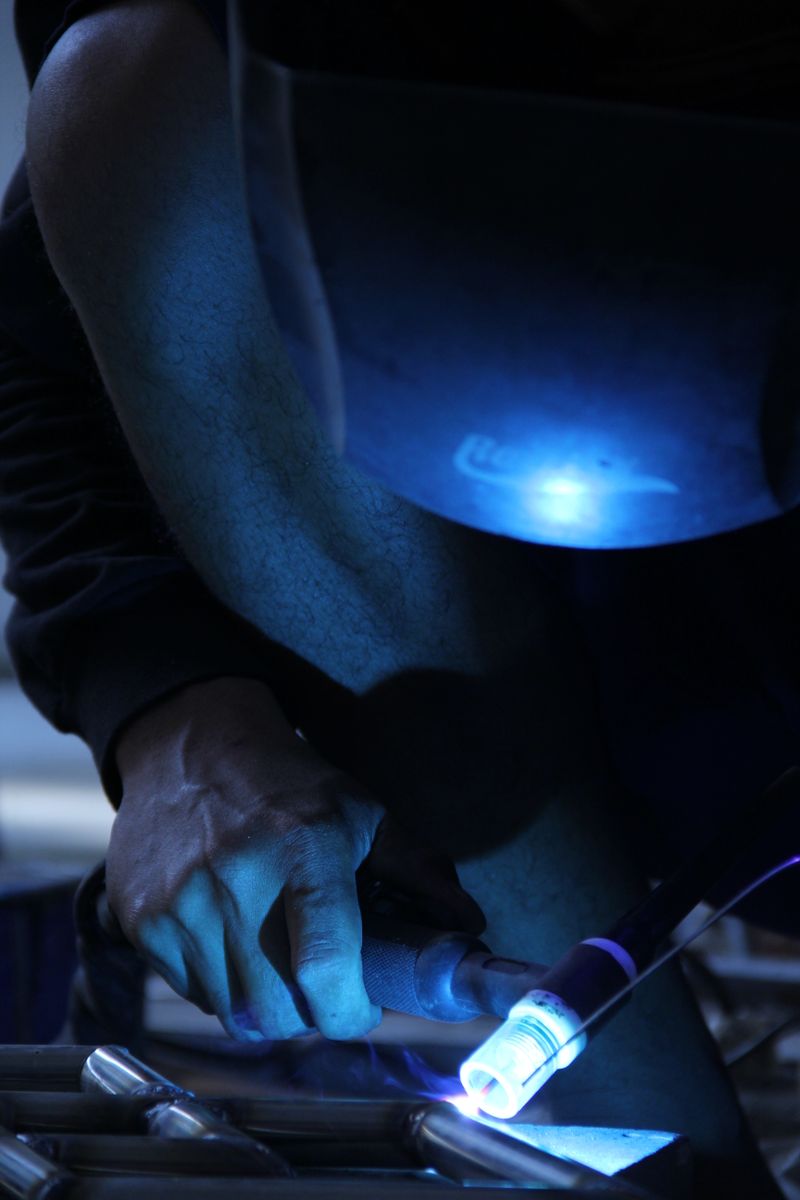
Multi-Process Welders: Are They Worth It?
The appeal of a multi-process welder is obvious: one machine for MIG, TIG, and stick welding. One purchase, one maintenance schedule, one power connection. But the welding industry has a saying — “jack of all trades, master of none” — and it applies here.
Whether a multi-process welder makes sense depends entirely on how and what you weld. This guide breaks down the real-world pros and cons and reviews the best multi-process welders on the market.
What Is a Multi-Process Welder?
A multi-process welder (also called a combo welder or all-in-one welder) combines two or more welding processes in a single power supply. Most combine:
- MIG/GMAW — Wire feed welding with shielding gas
- Flux-cored (FCAW) — Wire feed without gas
- Stick/SMAW — Electrode welding
- TIG/GTAW — Tungsten inert gas welding (DC, sometimes AC)
Some machines add plasma cutting or pulsed MIG to the list.
The Case FOR a Multi-Process Welder
1. Space Savings
A single machine takes up one machine footprint. For a home garage or small shop where space is a premium, replacing three separate welders with one unit frees up significant floor and wall space.
2. Cost Savings (Sometimes)
A dedicated MIG welder, TIG welder, and stick machine could easily cost $2,000–$5,000 combined. A quality multi-process machine that handles all three competently runs $600–$1,500. The savings are real — if the compromise on performance is acceptable.
3. Single Power Connection
In shops with limited electrical capacity, running one 240V circuit instead of three is a practical advantage.
4. Portability
Multi-process machines are typically built as compact, portable units. Contractors, mobile welders, and field repair operations benefit from carrying one machine instead of three.
5. Versatility for Occasional Processes
If you primarily MIG weld but occasionally need to TIG weld aluminum or stick weld a repair, buying a separate dedicated TIG welder for occasional use is hard to justify. A multi-process machine lets you access those processes without a major investment.
The Case AGAINST a Multi-Process Welder
1. Compromised Performance in Each Process
The most significant limitation: a machine optimized for all processes is rarely the best at any single one. Specifically:
- MIG on a combo machine — Wire feed consistency and arc smoothness are often not as refined as a dedicated MIG welder.
- TIG on a combo machine — Most budget multi-process machines offer DC TIG only (no aluminum). Arc start and pedal response may be less smooth than a dedicated TIG machine.
- Duty cycle is typically lower — Manufacturers achieve their output claims through shared components. Sustained heavy use of any single process can trigger thermal shutdowns sooner than a dedicated machine.
Compare that limitation at the output you will actually use. The welding duty-cycle guide shows how to normalize process, amperage, voltage, input power, test conditions, and real arc-on time instead of comparing headline percentages.
2. Reliability Concerns
More complex circuitry means more potential failure points. A dedicated MIG welder has one job; a multi-process machine must manage multiple configurations. Budget multi-process machines have a documented track record of process-switching reliability issues.
3. Simultaneous Use Limitation
You cannot TIG and MIG at the same time. If two welders work in your shop, two processes cannot run simultaneously from one machine.
4. Consumable Complexity
Different processes require different consumables (wire, electrodes, tungsten, filler rod, cups, nozzles). A multi-process machine does not reduce consumable inventory — it may increase it.
Best Multi-Process Welders
1. ESAB Rebel EMP 215ic — Best Overall Multi-Process Welder
Price: ~$900 | Processes: MIG, Flux-Core, TIG (DC), Stick | Input: 120/240V | Output: 15–215A
The ESAB Rebel EMP 215ic is the multi-process machine that closest approaches dedicated-machine performance in each process. The MIG performance is genuinely excellent — comparable to dedicated MIG welders at this price point. The DC TIG arc is smooth and responsive. Stick performs without issue.
What sets it apart:
- Color LCD display with intuitive process selection
- Multi-voltage input (120V/240V) — plug into any outlet
- sMIG (smart MIG) synergic control automatically adjusts settings
- Foot pedal compatible for TIG
- Genuinely good arc quality across processes
Limitation: DC TIG only — no aluminum welding. AC/DC requires stepping up to the Rebel 215ic-AC/DC at ~$1,500.
Best for: Fabricators who primarily MIG weld but need occasional stick and TIG capability.
2. Miller Multimatic 215 — Best for Beginners
Price: ~$1,100 | Processes: MIG, Flux-Core, TIG (DC), Stick | Input: 120/240V | Output: 20–230A
The Miller Multimatic 215 is the easiest multi-process machine to set up and use. Miller’s Auto-Set technology extends to MIG: select wire diameter and material thickness, and the machine sets voltage and wire speed automatically.
What sets it apart:
- Auto-Set makes MIG foolproof for beginners
- Miller’s characteristic smooth arc
- Multi-voltage input
- Professional build quality
Limitation: $1,100 price point. DC TIG only.
Best for: Home shop welders who want maximum ease of use and are willing to pay for Miller quality.
3. Lincoln Electric Power MIG 210 MP — Best Value Multi-Process
Price: ~$850 | Processes: MIG, Flux-Core, TIG (DC), Stick, Spool Gun | Input: 120/240V | Output: 20–210A
The Lincoln Electric Power MIG 210 MP adds spool gun compatibility to the multi-process lineup, which means aluminum MIG welding is possible (though not AC TIG aluminum). Lincoln’s dual-digital display makes parameter monitoring easier than single-dial machines.
What sets it apart:
- Spool gun compatibility — aluminum MIG
- Dual digital display
- Lincoln’s wire feed quality
- Solid customer support network
Best for: Welders who want aluminum capability and prefer Lincoln brand.
4. Forney Easy Weld 140 MP — Best Budget Multi-Process
Price: ~$350 | Processes: MIG, Flux-Core, TIG (DC), Stick | Input: 120V | Output: 20–140A
The Forney Easy Weld 140 MP makes multi-process accessible on a tight budget. At 120V and 140A, it is limited to thinner material, but for a home shop welder who needs occasional process flexibility, it delivers.
What sets it apart:
- Entry-level price
- Simple interface
- 120V — no dedicated circuit needed
Limitation: 120V only. 140A limits material thickness. Lower duty cycle.
Best for: Home DIYers who need occasional process variety without major investment.
5. Everlast PowerPro 256S — Best for Plasma + Welding
Price: ~$900 | Processes: MIG, TIG (AC/DC), Stick, Plasma Cutting | Input: 240V | Output: Up to 256A
The Everlast PowerPro 256S adds plasma cutting to the multi-process lineup — genuinely useful for fabricators who cut and weld the same material. AC/DC TIG means aluminum welding is possible.
What sets it apart:
- Plasma cutter included
- AC/DC TIG — welds aluminum
- Higher output than most combo machines
Limitation: Everlast’s support and long-term reliability are below Lincoln/Miller/ESAB standards.
Best for: Fabricators who want plasma cutting and AC TIG in one machine.
Multi-Process vs. Separate Machines: Decision Guide
| Situation | Recommendation |
|---|---|
| Home shop, occasional use, space-limited | Multi-process machine |
| Professional fabrication, MIG primary | Dedicated MIG + separate TIG |
| Production welding, single process | Dedicated machine always wins |
| Mobile contractor needing all processes | Multi-process for portability |
| Learning multiple processes | Multi-process — lower investment |
| Aluminum TIG critical | Dedicated AC/DC TIG machine |
| Budget under $600 | Multi-process (Forney, budget options) |
Final Verdict: Are Multi-Process Welders Worth It?
Yes — if:
- You genuinely use multiple processes but not at production volume
- Space or electrical capacity is limited
- Portability matters
- Budget does not allow separate dedicated machines
No — if:
- You weld one process at production volume
- Arc quality and performance are non-negotiable
- You need two people welding simultaneously
- TIG aluminum is a primary requirement (buy a dedicated AC/DC TIG machine)
The ESAB Rebel EMP 215ic is the multi-process machine we recommend most often — it comes closest to delivering dedicated-machine MIG performance while adding genuine stick and DC TIG capability. For most home shop and light professional use, it is more than sufficient.

The Welder's Guide Editorial Team
Independent trade-focused editorial team