Some links on this site are affiliate links. We may earn a commission at no cost to you. Learn more.
MIG Welding Settings Chart: Wire Speed and Voltage by Material
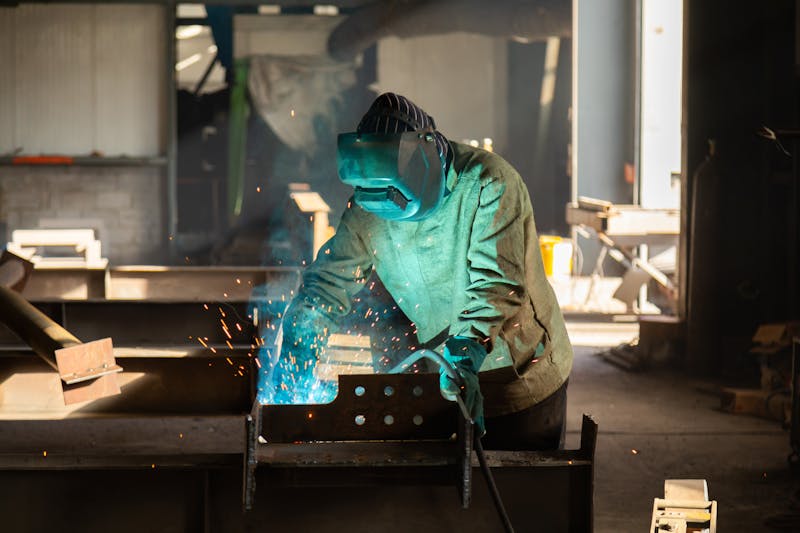
MIG Welding Settings Chart: Wire Speed and Voltage by Material
Getting your MIG welder dialed in correctly is the first step to making quality welds. The right combination of voltage and wire feed speed varies by material type, material thickness, wire diameter, and shielding gas. This reference guide gives you starting point settings for the most common MIG welding situations — bookmark it and adjust from there.
Important: These are starting points, not absolutes. Variables including machine brand, cable length, contact tip condition, base metal cleanliness, and ambient temperature affect ideal settings. Always run a test bead on scrap before welding your actual workpiece.
How to Read These Charts
Voltage determines arc length and penetration profile. Higher voltage = wider, flatter bead.
Wire feed speed (WFS) in inches per minute (IPM) determines amperage and deposition rate. Higher WFS = more amps = more heat = more penetration.
The relationship: Voltage and WFS must be balanced. Too high WFS relative to voltage causes stubbing and spatter. Too high voltage relative to WFS causes a wide, flat bead with possible burn-through on thin material.
Adjusting from the chart:
- If the bead sits too high (cold): increase voltage or decrease travel speed
- If there is burn-through: reduce voltage, increase WFS, or increase travel speed
- If excessive spatter: adjust voltage up or WFS down slightly
Carbon Steel Settings (ER70S-6 Wire, 75/25 Ar/CO2 Gas, 15-20 CFH)
0.023” Wire (Best for 24–18 gauge thin sheet metal)
| Thickness | Voltage | WFS (IPM) | Approximate Amps |
|---|---|---|---|
| 24 gauge (0.024”) | 13–15V | 100–150 | 40–55 |
| 22 gauge (0.030”) | 14–16V | 130–170 | 50–65 |
| 20 gauge (0.036”) | 15–17V | 150–200 | 60–80 |
| 18 gauge (0.047”) | 16–18V | 175–225 | 70–90 |
| 16 gauge (0.062”) | 17–19V | 200–260 | 80–105 |
0.030” Wire (Best for 16 gauge–3/16”)
| Thickness | Voltage | WFS (IPM) | Approximate Amps |
|---|---|---|---|
| 18 gauge (0.047”) | 15–17V | 120–160 | 60–80 |
| 16 gauge (0.062”) | 16–18V | 150–190 | 75–95 |
| 14 gauge (0.075”) | 17–19V | 175–220 | 90–110 |
| 1/8” (0.125”) | 18–20V | 220–280 | 110–140 |
| 3/16” (0.188”) | 19–21V | 280–350 | 140–175 |
0.035” Wire (Standard Production Wire, 3/16”–1/2”)
| Thickness | Voltage | WFS (IPM) | Approximate Amps |
|---|---|---|---|
| 1/8” (0.125”) | 18–20V | 160–210 | 110–140 |
| 3/16” (0.188”) | 19–21V | 210–270 | 140–175 |
| 1/4” (0.250”) | 20–22V | 260–320 | 165–200 |
| 5/16” (0.313”) | 21–23V | 300–380 | 190–230 |
| 3/8” (0.375”) | 22–24V | 350–440 | 220–270 |
| 1/2” (0.500”) | 23–26V | 380–480 | 250–300 |
0.045” Wire (Heavy Production Welding)
| Thickness | Voltage | WFS (IPM) | Approximate Amps |
|---|---|---|---|
| 1/4” (0.250”) | 21–23V | 150–200 | 165–210 |
| 3/8” (0.375”) | 22–25V | 200–260 | 210–270 |
| 1/2” (0.500”) | 24–27V | 260–340 | 270–350 |
| 3/4” (0.750”) | 26–29V | 350–440 | 350–430 |
| 1” (1.000”) | 27–30V | 420–500 | 420–500 |
Carbon Steel — 100% CO2 Shielding Gas Adjustments
Using 100% CO2 instead of 75/25 Ar/CO2 requires adjustment:
- Increase voltage by 1–2V (CO2 has a higher ionization potential)
- Expect more spatter — CO2 produces an aggressive arc
Most shops prefer 75/25 for spatter control, but CO2 is less expensive and provides deeper penetration.
Stainless Steel Settings (ER308L Wire, 90/10 Ar/CO2 or Tri-Mix Gas)
Tri-mix gas (90% He / 7.5% Ar / 2.5% CO2) is preferred for stainless short-circuit transfer — it produces a more stable arc and cleaner bead than 75/25 on stainless.
0.030” ER308L Wire
| Thickness | Voltage | WFS (IPM) | Notes |
|---|---|---|---|
| 18 gauge | 16–18V | 140–180 | Stainless needs higher voltage than steel |
| 16 gauge | 17–19V | 170–210 | |
| 1/8” | 18–20V | 210–260 | |
| 3/16” | 19–21V | 260–320 | Consider multi-pass |
| 1/4” | 20–22V | 300–380 | Multiple passes required |
Stainless Steel Tips
- Low heat input — Stainless retains heat and sensitizes in the HAZ if overheated. Keep travel speed up.
- Interpass temperature — Allow to cool below 350°F between passes
- No CO2 above 5% — Higher CO2 causes carbon pickup and reduces corrosion resistance
- Purge back side of pipe and tube welds with argon
Aluminum Settings (ER4043 or ER5356 Wire, 100% Argon, Spool Gun or Push-Pull)
Important: Aluminum MIG requires a dedicated liner and drive rolls. U-groove drive rolls are required to avoid deforming the soft aluminum wire. Push-pull gun systems are necessary for runs over 6–10 feet.
0.035” ER5356 Wire (Push-Pull Gun, 100% Argon at 20–25 CFH)
| Thickness | Voltage | WFS (IPM) | Notes |
|---|---|---|---|
| 1/8” | 18–20V | 200–260 | Clean aluminum, preheat not required |
| 3/16” | 19–22V | 260–320 | |
| 1/4” | 21–24V | 300–380 | |
| 3/8” | 23–26V | 360–440 | Preheat helps on thick sections |
| 1/2” | 24–28V | 420–500 | Preheat 200–250°F |
Aluminum MIG Tips
- Higher voltage relative to steel — Aluminum has higher thermal conductivity and requires more energy
- Faster travel speed — Move faster than on steel to avoid burn-through
- Start cold — Aluminum builds heat quickly. Reduce amperage at the start and increase as the part heats up.
- Forehand (push) technique — Always push on aluminum; dragging creates porosity
- Clean immediately before welding — Use stainless steel wire brush dedicated to aluminum, then acetone wipe
Flux-Cored Wire Settings (FCAW)
E71T-1 Gas-Shielded Flux-Cored (75/25 Ar/CO2 or 100% CO2)
Flux-cored wire typically runs at higher voltages than solid wire of the same diameter:
0.035” E71T-1C Wire (100% CO2)
| Thickness | Voltage | WFS (IPM) | Position |
|---|---|---|---|
| 1/8” | 19–21V | 200–260 | All positions |
| 3/16” | 20–22V | 250–320 | All positions |
| 1/4” | 21–24V | 300–380 | Flat/horizontal preferred |
| 3/8” | 23–26V | 350–450 | Flat/horizontal |
0.045” E71T-1C Wire (100% CO2, Flat/Horizontal)
| Thickness | Voltage | WFS (IPM) | Approx Deposition (lbs/hr) |
|---|---|---|---|
| 3/16” | 22–24V | 200–260 | 8–12 |
| 1/4” | 23–26V | 250–320 | 11–15 |
| 3/8” | 25–28V | 300–380 | 14–18 |
| 1/2” | 26–29V | 350–440 | 16–20 |
Self-Shielded Flux-Cored (FCAW-S, No Gas)
Self-shielded flux-core generally runs at slightly higher voltages than gas-shielded. Specific settings vary significantly by manufacturer — always check the wire manufacturer’s data sheet.
General range for E71T-11 at 0.035” (all-position):
- Voltage: 16–19V
- WFS: 150–250 IPM
Polarity Quick Reference
| Wire Type | Polarity |
|---|---|
| ER70S-6 solid wire | DCEP (electrode positive) |
| Stainless solid wire | DCEP |
| Aluminum solid wire | DCEP |
| E71T-1 gas-shielded FCAW | DCEP |
| E71T-8 self-shielded FCAW | DCEN (electrode negative) |
| E71T-11 self-shielded FCAW | DCEN |
Check your wire’s data sheet before welding — self-shielded wires vary. Using wrong polarity on self-shielded wire causes severe porosity and erratic arc.
Troubleshooting Common MIG Settings Problems
| Problem | Likely Cause | Fix |
|---|---|---|
| Wire stubbing into puddle | Voltage too low, WFS too high | Increase voltage |
| Burn-through on thin material | Too much voltage or too-slow travel | Reduce voltage, increase travel speed |
| Weld bead too convex (sits high) | Voltage too low, or travel too fast | Increase voltage |
| Wide, flat bead, excessive penetration | Voltage too high | Reduce voltage |
| Heavy spatter | Voltage/WFS imbalance or dirty metal | Balance settings, clean metal |
| Porosity | Contaminated metal, wrong gas, or bad wire | Clean metal, check gas flow, replace wire |
| Arc going out | Worn contact tip or loose connection | Replace tip, check connections |
Equipment Recommendations
To make the most of these settings charts:
- Auto-darkening helmet: Lincoln Electric Viking 3350 — shade 9–13, excellent optical clarity
- Welding pliers: Lincoln Electric Welpers — for contact tip changes and nozzle cleaning
- Contact tips: Keep spares in your wire diameter. Replace when worn.
- Nozzle dip: Weld-Aid Nozzle Dip — prevents spatter buildup
The settings in this guide give you a solid starting point. Run a test bead, evaluate the result, and make small adjustments. Once you find the right settings for a given material and thickness, record them — building your own settings library for your specific machine is the fastest way to produce consistent results.

The Welder's Guide Team
Certified Welder & Founder of The Welder's Guide
Get our free Welding Safety Checklist — delivered to your inbox.
No spam. Unsubscribe anytime.
Recommended Product
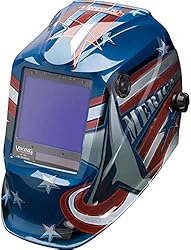
Lincoln Electric Viking 3350 Auto-Darkening Helmet
A premium auto-darkening welding helmet with 1/1/1/1 optical clarity, 4C lens technology, and a wide viewing area. Comfortable for all-day use.
- ✓ 4C lens technology
- ✓ 1/1/1/1 optical clarity
- ✓ Wide 12.5 sq in view
- ✓ Grind mode
As an Amazon Associate, we earn from qualifying purchases.
Get Your Free Welding Safety Checklist
Join thousands of readers. Expert tips and guides delivered to your inbox — no spam, ever.
No spam. Unsubscribe anytime. View our Privacy Policy.
Affiliate Disclosure
Some of the links on this page are affiliate links. If you click on one of these links and make a purchase, we may receive a small commission at no additional cost to you. This helps support our site and allows us to continue providing free content.
We only recommend products we believe in. All opinions are our own. We are a participant in the Amazon Services LLC Associates Program, an affiliate advertising program designed to provide a means for us to earn fees by linking to Amazon.com and affiliated sites.