Brazing vs. Welding: When to Use Each and How to Braze
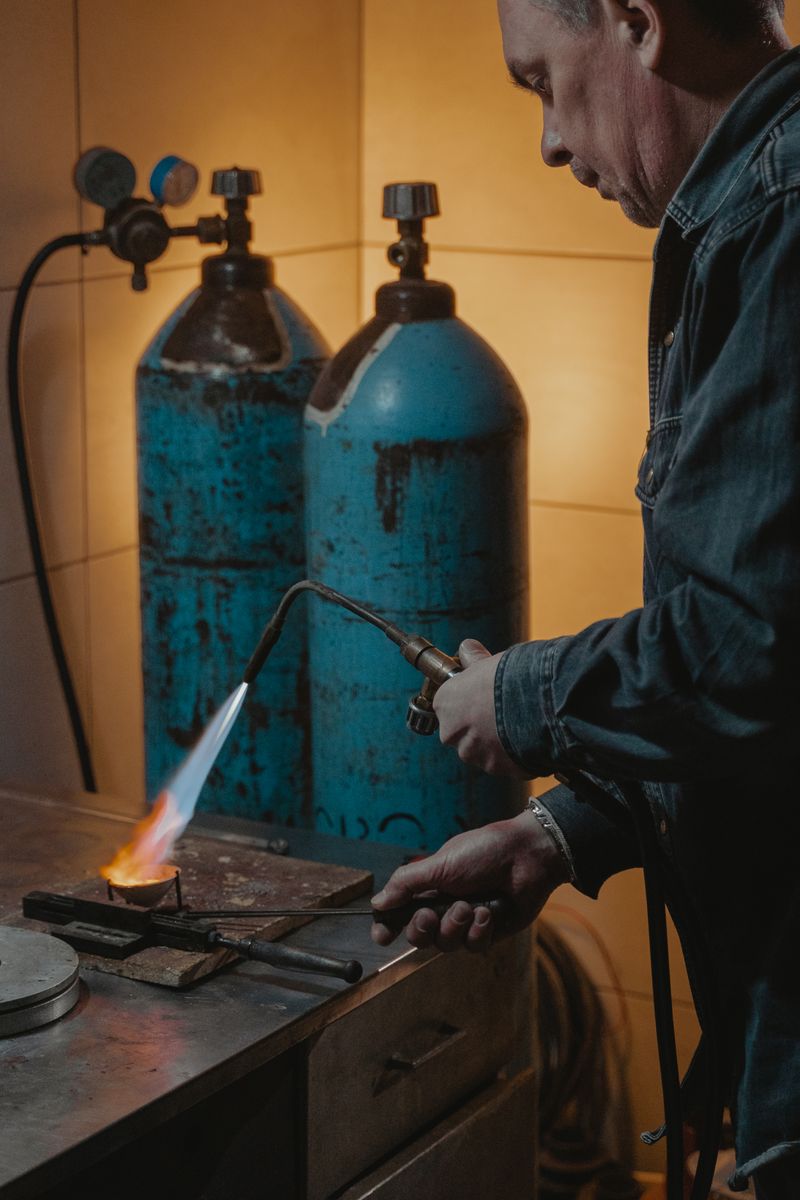
Brazing vs. Welding: When to Use Each and How to Braze
Brazing and welding are both processes for permanently joining metals, but they work differently and have different strengths. The choice between them is not always obvious — understanding the mechanics of each helps you make the right call for your specific application.
The short version: welding fuses the base metal itself; brazing joins metals by adhesion of a filler metal without melting the base. Each has applications where it outperforms the other.
How Brazing Works
Brazing uses a filler metal with a melting point above 840°F (450°C) but below the melting point of the base metal. When the base metal reaches brazing temperature, the filler metal flows into the joint by capillary action — drawn into tight gaps by surface tension. As it cools, the filler bonds metallurgically to both surfaces.
Key distinction from welding: the base metal does not melt. The joint is formed by metallurgical bonding at the base metal surface, not by fusing the metals together.
Key distinction from soldering: Brazing uses higher temperatures (above 840°F) and filler metals that produce stronger joints than soft solder.
How Welding Works
Welding melts both the base metal and filler metal together in a common molten pool. When the pool solidifies, the base metal from both pieces has mixed and solidified as one continuous piece of metal. The joint strength can equal or exceed the base metal strength.
Temperature Comparison
| Process | Temperature Range | Filler Melt Point |
|---|---|---|
| Soft soldering | Below 840°F | Tin-lead, tin-silver, tin-copper |
| Silver brazing | 1100–1650°F | Silver alloy filler (BAg series) |
| Copper brazing | 1550–2100°F | Copper-zinc (BCuZn), copper-phosphorus |
| Bronze brazing | 1600–1700°F | Silicon bronze (CuSi alloy) |
| Braze welding | 1700–1900°F | Bronze rod with flux |
| Oxy-fuel welding | 2600–2900°F | Match base metal |
| MIG/TIG/Stick | 3000–6500°F arc temp | Match base metal |
Joint Strength Comparison
Welded joints can match or exceed base metal strength when properly executed. A correctly made weld in A36 steel (36,000 psi yield) can achieve the same 36,000 psi or higher in the weld metal.
Brazed joints do not match base metal strength in tension directly — but in a well-designed lap joint, the larger bonded area compensates. Silver brazed joints on copper, for example, can achieve 30,000–70,000 psi shear strength depending on filler metal and gap size.
Gap size matters enormously in brazing. Counterintuitively, tighter gaps produce stronger brazed joints. Optimal gap for most brazing: 0.001”–0.005” (0.025mm–0.125mm). At 0.000” (contact), filler cannot flow in; at 0.010”+, joint strength drops significantly.
When to Braze Instead of Weld
1. Joining Dissimilar Metals
Brazing joins metals that are difficult or impossible to weld together:
- Copper to steel
- Copper to brass
- Stainless steel to copper
- Carbide to steel (tool bit brazing)
- Tungsten carbide to steel
These dissimilar metal combinations are routinely brazed but cannot be fusion welded without complex procedures.
2. Heat-Sensitive Assemblies
Brazing temperatures (1100–1700°F) are lower than welding temperatures (3000°F+). Components adjacent to the joint experience less heat and less distortion. Applications:
- Electronic assemblies
- Thin-walled tubes and small-diameter copper plumbing
- Previously heat-treated parts that cannot tolerate welding temperatures
- Assembled mechanisms where adjacent parts would be damaged by welding heat
3. Copper and Brass Applications
Copper pipe (refrigerant lines, plumbing) is almost universally joined by brazing, not welding. HVAC line sets require silver brazing to ACR code. Brass fittings, valves, and instruments are routinely brazed.
4. Thin or Small Parts
Thin sheet metal (under 0.020”) and small-diameter tubes that would burn through under welding heat are readily brazed. The lower heat input of brazing is gentler on thin material.
5. Production Furnace Brazing
In high-volume manufacturing (automotive components, cutting tools, diamond tooling), furnace brazing joins many parts simultaneously in a controlled atmosphere furnace. This is not possible with welding processes.
6. Aesthetics
Brazed joints, particularly bronze braze welds, blend with base metal and can be finished to near-invisibility. Decorative ironwork, furniture, and artistic metalwork sometimes use bronze brazing for its appearance.
When to Weld Instead of Braze
1. Structural Loads
For joints that carry primary structural loads in tension, a fusion weld is stronger than a brazed joint of the same configuration.
2. High-Temperature Service
Brazed joints are limited by the temperature resistance of the filler metal. Silver brazed joints soften at temperatures approaching the filler’s melting point (around 1100–1400°F for common silver alloys). Welded joints retain base metal properties up to the base metal’s temperature limits.
3. Speed and Simplicity
MIG welding is faster than brazing for most structural steel fabrication work. Setting up an oxy-acetylene brazing torch takes more time than striking a MIG arc.
4. Thick Section Joints
Brazing thick sections is difficult because the entire mass must reach brazing temperature before filler can flow. Welding thick sections (with appropriate preheat and interpass temperature control) is more controllable.
Brazing Filler Metal Types
Silver Brazing Alloys (BAg Series)
Silver alloys are the most versatile brazing fillers:
- BAg-1 (Easy-Flo) — 45% silver, 15% copper, 16% zinc, 24% cadmium. The original general-purpose silver braze. Flows at low temperature (1145°F). Contains cadmium — toxic fumes. Not recommended.
- BAg-5 (Easy-Flo 45 cadmium-free) — 45% silver. Cadmium-free replacement for BAg-1.
- BAg-7 — 56% silver. Low temperature, cadmium-free. Excellent for stainless steel.
- BAg-24 — 50% silver. Good general-purpose cadmium-free silver alloy.
For HVAC and refrigeration work, Harris Stay-Silv 15% silver brazing alloy is widely used. For stronger joints, 45% silver alloy is the standard.
Copper-Phosphorus Alloys (BCuP Series)
BCuP alloys (copper-phosphorus, sometimes called “Sil-Fos”) are the standard for copper-to-copper brazing:
- BCuP-2 (Sil-Fos 5) — 5% silver, 6% phosphorus, balance copper. No flux required on copper. The standard HVAC refrigeration brazing rod.
- BCuP-5 (Sil-Fos 15) — 15% silver. Better wetting on dissimilar metals.
The phosphorus acts as a self-fluxing agent on copper — no separate flux is needed when joining copper to copper. Flux is required when joining copper to other metals.
Recommended: Harris Sil-Fos 15 BCuP-5 — the HVAC industry standard.
Bronze Brazing Rods (Braze Welding)
Silicon bronze and manganese bronze rods are used for braze welding — a hybrid process that looks more like welding (larger, visible filler deposits) but operates at brazing temperatures:
- RBCuZn-C (Tobin Bronze) — Copper-zinc-tin alloy. Used for braze welding cast iron, copper to steel, and brass.
- ERCuSi-A (Silicon Bronze) — Excellent for oxy-fuel and TIG braze welding. Smooth flow, good appearance.
The Harris Safety-Silv 56 Bronze Brazing Rod works well for oxy-acetylene braze welding.
Brazing Flux
Most brazing operations (except BCuP on copper-to-copper) require flux. Flux:
- Removes oxides from the base metal surface
- Prevents re-oxidation during heating
- Promotes filler flow by reducing surface tension
Flux selection:
- General-purpose brazing flux (white paste) — for silver brazing at 1100–1600°F. Harris Stay-Silv White Brazing Flux
- High-temperature flux (black paste) — for higher-temperature alloys and longer heating times
- No flux needed — BCuP on copper-to-copper
Apply flux to the joint area before heating. As temperature rises, flux will bubble, then clear and become liquid. The joint is ready to receive filler when flux is molten and clear.
How to Braze: Step-by-Step
Equipment Needed
- Oxy-acetylene torch or MAPP/propane torch (for lighter work)
- Brazing rods appropriate for your metals
- Flux (if required)
- Stainless steel brush for cleaning
- Fire bricks or firebrick stand
- Pickle solution (citric acid or diluted sulfuric acid) for post-braze flux removal
Step 1: Clean the Joint Surfaces
Remove all oil, grease, paint, and oxidation from both surfaces. Use acetone followed by a wire brush or abrasive.
This step is critical. Brazing filler will not flow onto contaminated surfaces.
Step 2: Apply Flux
Brush flux onto both surfaces in the joint zone. Apply more flux than you think necessary — it burns off during heating.
Step 3: Assemble and Support the Joint
Position parts in the correct alignment and support them so they cannot shift during brazing. Gravity will affect filler flow — arrange the joint so filler flows into (not out of) the joint by gravity.
Step 4: Heat the Assembly
With an oxy-acetylene torch (neutral to slightly reducing flame), heat the base metal, not the filler rod. The joint needs to be at brazing temperature — not the filler rod.
Move the torch constantly. Heat the whole joint area evenly. Concentrate on the heavier section if parts are unequal mass.
Watch the flux: when it flows liquid and clear, the base metal is at brazing temperature.
Step 5: Apply Filler
Touch the filler rod to the joint (not the flame). The base metal temperature should melt the filler. If the filler only melts where the flame touches it, the base metal is not hot enough yet.
As the filler flows, guide it around the joint with the rod. Capillary action draws it into the gap.
Step 6: Cool and Clean
Allow to cool in still air. Do not quench — thermal shock can crack a brazed joint.
When cool enough to handle safely, clean flux residue:
- Mechanical cleaning with a wire brush, or
- Soak in diluted citric acid pickle solution (dissolves flux residue cleanly)
Rinse and inspect the finished joint. A properly brazed joint will show filler visible at both edges of the joint with smooth fillet appearance.
Brazing Equipment Recommendations
- Torch: Victor Technologies Journeyman oxy-acetylene outfit — includes torch, regulators, and hoses
- Filler rods: Harris Stay-Silv kit (multiple alloys)
- Flux: Harris Stay-Silv White flux
- Fire bricks: Rutland fire bricks — heat-resistant work surface
Brazing is a valuable skill that complements welding — covering applications where welding cannot go or where the lower temperature and dissimilar metal capability of brazing produces better results.

The Welder's Guide Editorial Team
Independent trade-focused editorial team