Best Stick Welders for 2026: Reviewed and Ranked
Best Stick Welders for 2026: Reviewed and Ranked
Stick welding — formally known as Shielded Metal Arc Welding (SMAW) — is the most widely used welding process in the world. It runs on simple equipment, tolerates rusty and painted metal, works outdoors in wind, and is the process most welding certifications are built around. A good stick welder is one of the most versatile tools a fabricator, tradesperson, or serious hobbyist can own.
This guide covers the best stick welders available in 2026 — from the iconic Lincoln Tombstone that has been on the market since the Eisenhower era to compact inverter machines that fit in a backpack and run on a standard 120V outlet. Whether you are buying your first welder or upgrading from an underpowered machine, there is a pick here for your work and budget.
How Stick Welding Works
A stick welder clamps an electrode — a coated metal rod — into a stinger (electrode holder) connected to the output terminal. When the electrode touches the workpiece, the arc ignites, melting both the electrode and the base metal. The flux coating on the electrode vaporizes into a shielding gas and slag layer that protects the molten weld pool from atmospheric contamination.
Stick welding uses consumable electrodes, meaning you need to buy replacement rods. This is a minor ongoing cost, but electrode selection is critical — different rods are designed for different base metals, positions, and joint types. The most important thing to understand before buying a welder is whether you need AC output, DC output, or both.
What to Look for in a Stick Welder
AC vs DC output: This is the single most important specification in stick welding.
- DC output produces a smoother, more stable arc than AC. It is compatible with virtually every electrode type, including E6010 (the rod demanded by pipeline and structural welding certifications). DC is the standard for professional and serious hobbyist use.
- AC output is cheaper to produce in a machine and works fine with common electrodes like E6011, E6013, and E7018. If you are doing basic fabrication and repair work around the farm or shop, an AC machine is sufficient and significantly more affordable.
Amperage range: Most stick welding is done in the 70–160 amp range for common electrode sizes (3/32” through 1/8”). For larger electrodes (5/32” and bigger) on thick material, you need 200+ amps. Size your machine to your typical work — a 160-amp machine handles most home-shop and contractor needs; 210+ amps opens up heavier plate work.
Duty cycle: Stick welding naturally breaks up into short arcs (stub out a rod, chip slag, strike a new arc), so duty cycle matters less than in MIG or plasma cutting. Still, machines with higher duty cycles at rated amperage handle continuous production work better. Budget inverters often run 60% duty cycle at lower settings.
Input voltage: Transformer-based machines nearly always require 240V. Modern inverter machines increasingly offer dual-voltage input (120V/240V), which is a real advantage — you can weld from any circuit in your house, garage, or job site. The trade-off is that 120V input limits output amperage, typically to around 90–110 amps.
Weight and portability: This is where inverter machines have transformed the industry. Traditional transformer stick welders weigh 60–100 lbs. Modern inverter machines weigh 10–20 lbs. If you are working in the field, on scaffolding, or simply have a small shop, the weight difference is significant.
Hot Start and Arc Force: These are electronic features found on inverter machines that improve real-world usability. Hot Start temporarily boosts amperage at arc initiation to help prevent the rod from sticking to cold base metal. Arc Force (also called “dig”) automatically increases current when the arc shortens, preventing the electrode from sticking during short-arc welding. Both are standard on most modern inverter machines; traditional transformer welders have neither.
Electrode compatibility: If you plan to run E6010 electrodes — required for pipe welding and most structural certifications — you need a DC machine with a stable low-frequency arc. The E6010 is notoriously unforgiving with weak or inconsistent power sources. Not all inverters handle E6010 well; the machines listed below are noted when they do.
Top Stick Welders for 2026
1. Miller Thunderbolt 210 — Best Overall Stick Welder
Price: ~$550 | Output: DC | Input: 120V/240V | Max Amperage: 210A (240V) / 110A (120V) | Weight: 13 lbs
The Miller Thunderbolt 210 is Miller’s flagship inverter stick welder and the machine that sets the benchmark for this category. At 13 lbs with dual-voltage input, it combines the arc quality Miller is known for with genuine portability and the flexibility to run from any power source.
What we like:
- Smooth, stable DC arc — Miller’s reputation is built on arc quality, and it shows
- Dual voltage (120V or 240V) with no rewiring required — use the included plug adapters
- Handles E6010 electrodes well — important for certification and pipe work
- Hot Start and Arc Force included
- 10-foot electrode cable and work clamp included
- 3-year Miller warranty and extensive U.S. service network
- 13 lbs — lighter than a car battery
What we don’t like:
- Premium price compared to import inverters at similar amperage
- DC only — cannot run the few AC-only electrode types
Best for: Serious hobbyists, mobile fabricators, contractors, and anyone who wants a machine they will never need to replace. The Thunderbolt 210 handles everything from thin sheet metal to 1/2” plate and runs every electrode type you will ever need.
2. Lincoln Electric AC225 — Best Classic Transformer Stick Welder
Price: ~$330 | Output: AC | Input: 240V | Max Amperage: 225A | Weight: 43 lbs
The Lincoln Electric AC225 (K1170) has been in continuous production since 1953. Nicknamed the “Tombstone” for its distinctive rectangular shape, it is the most recognizable welder in North America — found in high school shop classes, farm shops, and professional fabrication facilities alike.
What we like:
- 225 amps of AC output handles virtually any electrode size through 5/32” diameter
- Bulletproof reliability — no electronics to fail, no firmware to update
- Full-range amperage selector dial is simple and precise
- Lincoln’s legendary build quality — machines from the 1970s still run today
- Included cable set is ready to weld on day one
- Lowest price-per-amp of any machine in this category
What we don’t like:
- AC output only — does not run E6010 electrodes
- No Hot Start or Arc Force — arc starting is less forgiving for beginners
- Requires a dedicated 240V circuit — no 120V option
- Heavy at 43 lbs compared to modern inverters
- Limited electrode compatibility relative to DC machines
Best for: Farm and ranch shops, home garages, structural repair, and anyone who needs a simple, high-amperage machine that will outlast the building it lives in. If you weld primarily with E6011, E6013, or E7018 and have a 240V outlet, this machine is nearly impossible to justify replacing.
3. Hobart Stickmate 160i — Best Compact Portable Stick Welder
Price: ~$350 | Output: DC | Input: 120V/240V | Max Amperage: 160A (240V) / 90A (120V) | Weight: 9 lbs
The Hobart Stickmate 160i is one of the lightest full-featured stick welders on the market. At 9 lbs, it is Hobart’s answer to field welders, maintenance technicians, and anyone who needs a capable stick welder they can carry one-handed.
What we like:
- 9 lbs — genuinely portable, carry it in a bag
- DC output with Hot Start and Arc Force for smooth, beginner-friendly starts
- Dual voltage flexibility — plug into a standard outlet or a 240V circuit
- 160 amps handles common electrode sizes through 5/32” on 240V
- Hobart’s 5-year warranty is industry-leading for this price point
- Runs E6013 and E7018 exceptionally well; decent E6011 performance
What we don’t like:
- 90-amp limit on 120V restricts electrode size to 3/32” maximum
- E6010 performance is inconsistent — not recommended if E6010 is your primary rod
- 160-amp ceiling limits heavier plate work
Best for: Field maintenance, pipeline repair support, contractors working from job-site power, and anyone who prioritizes portability over raw output. The Stickmate 160i is the machine you grab when you need to weld in a tight space, up a ladder, or across a job site.
4. Hobart Stickmate 210i — Best Mid-Range Home-Shop Stick Welder
Price: ~$500 | Output: DC | Input: 240V | Max Amperage: 210A | Weight: 20 lbs
The Hobart Stickmate 210i is Hobart’s step up for welders who need more amperage than the 160i can deliver. With 210 amps of DC output on 240V, it handles everything the AC225 handles but with the advantages of inverter technology: lighter weight, electronic arc controls, and full DC electrode compatibility.
What we like:
- 210 amps of clean DC output — covers heavy plate work and large electrode sizes
- Inverter efficiency: 20 lbs versus the AC225’s 43 lbs at comparable amperage
- Hot Start and Arc Force for smooth starts with any rod type
- Compatible with E6010 — important if you plan to certify or do pipe work
- Hobart’s 5-year warranty
- 30% duty cycle at 210A — respectable for a machine this size
What we don’t like:
- 240V only — no 120V flexibility
- Premium over the AC225 for users who do not need DC or inverter features
- Some users note the build quality feels slightly lighter than the Miller equivalent
Best for: Serious home-shop fabricators, hobbyists working on thicker steel, and anyone who wants the Lincoln AC225 amperage range with the benefits of a modern DC inverter. The Stickmate 210i is the practical upgrade from the Tombstone for welders who care about rod selection.
5. ESAB Rogue ES 180i Pro — Best Value Import Stick Welder
Price: ~$450 | Output: DC | Input: 120V/230V | Max Amperage: 180A | Weight: 17 lbs
The ESAB Rogue ES 180i Pro represents ESAB’s effort to compete in the portable inverter market against Hobart and Miller. ESAB is a Swedish company with genuine engineering credentials — they are not simply rebranding Chinese machines — and the Rogue ES 180i Pro reflects that.
What we like:
- 180 amps DC handles most stick welding applications up to 1/2” material
- Dual voltage (120V/230V) — flexible across job sites and garages
- IP23S rated — weather-resistant and built for outdoor and field use
- Adjustable Arc Force and Hot Start for electrode-specific tuning
- Also TIG capable (scratch-start) — doubles as a DC TIG welder for thin material
- Handles E6010 reliably — rated for pipeline and structural rod performance
- 3-year ESAB warranty
What we don’t like:
- More expensive than comparable-amperage import brands
- DC TIG requires a separate TIG torch and argon gas — it is a bonus, not a primary feature
- 120V input limits output to around 90 amps
Best for: Welders who want something better than a generic import without paying full Miller or Hobart prices. The ESAB brand carries real weight in professional circles, the dual-voltage input is practical, and the E6010 capability makes it certification-ready.
6. YesWelder ARC-205DS — Best Budget Stick Welder
Price: ~$160 | Output: DC | Input: 110V/220V | Max Amperage: 205A | Weight: 10 lbs
The YesWelder ARC-205DS is the top-selling budget stick welder in the category, and for most casual users it is all the machine they need. At $160, it is a legitimate DC inverter welder with digital controls, dual-voltage input, and 205 amps of claimed output.
What we like:
- Lowest price for a dual-voltage DC inverter stick welder
- Digital amperage display for precise settings
- Hot Start and Arc Force included — better arc starting than the price suggests
- 10 lbs — genuinely portable
- 205-amp claimed output handles most electrode sizes
- Includes electrode holder and work clamp
What we don’t like:
- E6010 performance is inconsistent — the arc can wander on cellulosic electrodes
- Real-world maximum amperage on 110V is closer to 90 amps
- Build quality is noticeably lighter than Hobart or Miller
- Customer support and warranty service is slower than domestic brands
- Some units show amperage display inaccuracies
Best for: First-time welders, hobbyists with light workloads, and anyone who wants to try stick welding before committing to a higher-budget machine. For E6013 and E7018 work on mild steel, the YesWelder punches well above its price. Avoid it if you need reliable E6010 performance.
Stick Welder Comparison Chart
| Model | Price | Output | Max Amps | Input | Weight | E6010 | Best For |
|---|---|---|---|---|---|---|---|
| YesWelder ARC-205DS | ~$160 | DC | 205A | 110/220V | 10 lbs | Fair | Best budget |
| Lincoln AC225 | ~$330 | AC | 225A | 240V | 43 lbs | No | Best classic/transformer |
| Hobart Stickmate 160i | ~$350 | DC | 160A | 120/240V | 9 lbs | Fair | Best portable |
| ESAB Rogue ES 180i Pro | ~$450 | DC | 180A | 120/230V | 17 lbs | Yes | Best value import |
| Hobart Stickmate 210i | ~$500 | DC | 210A | 240V | 20 lbs | Yes | Best mid-range home shop |
| Miller Thunderbolt 210 | ~$550 | DC | 210A | 120/240V | 13 lbs | Yes | Best overall |
Electrode Quick Reference
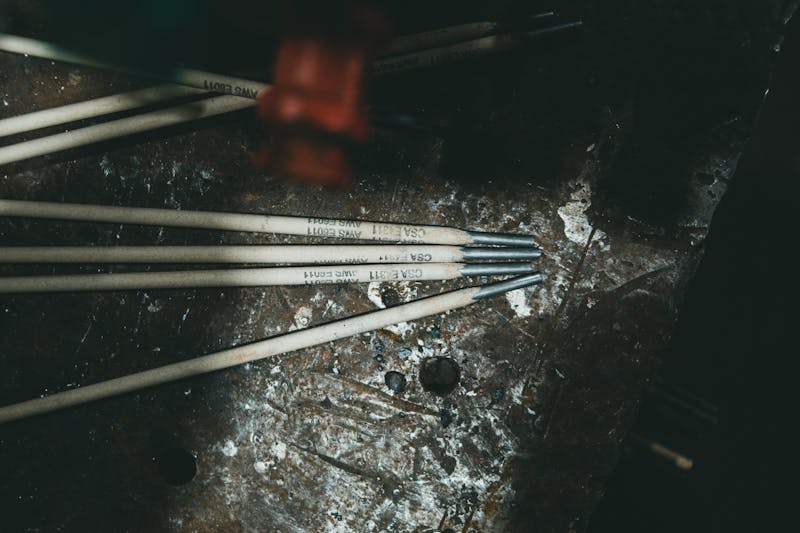
Electrode selection is as important as machine selection. Most stick welding falls into a handful of rod types:
- E6010: Fast-freeze cellulosic electrode for pipe welding, root passes, and dirty metal. Requires DC+. Demanding arc that rewards technique. The certification rod.
- E6011: The AC equivalent of E6010. Runs on AC or DC, penetrates rust and paint, fast-freeze. Good all-position general-purpose rod for AC machines.
- E6013: Easiest rod for beginners. Mild penetration, smooth arc, low spatter. Good for thin metal and clean joints. Runs on AC or DC.
- E7018: The most used structural rod. Low-hydrogen coating, requires dry storage (keep in a rod oven), beautiful smooth welds. AC or DC. Requires a clean joint.
If you are starting out, buy E6013 for general shop work and E7018 for anything structural. If you plan to certify, you will eventually need E6010 — make sure your machine runs it before you buy.
Which Stick Welder Should You Buy?
The right machine depends on what you weld, where you weld it, and which electrodes you need:
- First welder, tight budget: YesWelder ARC-205DS — lowest cost entry into DC stick welding. Run E6013 and E7018 and you will get solid results for general work.
- Farm/ranch/heavy shop with a 240V outlet: Lincoln Electric AC225 — 70 years of proven service, highest amperage in the category, and no electronics to fail. Hard to beat for utility and longevity.
- Maximum portability for field work: Hobart Stickmate 160i — 9 lbs and dual voltage puts it in a class by itself for contractors and mobile welders.
- Home shop, need DC and 200+ amps: Hobart Stickmate 210i — same platform as the 160i but with full 210-amp DC output, E6010 capability, and Hobart’s 5-year warranty.
- Import quality with professional credentials: ESAB Rogue ES 180i Pro — more than a budget import, less than a Miller, with a real engineering lineage and outdoor-rated construction.
- Best machine, period: Miller Thunderbolt 210 — dual voltage, 13 lbs, 210 amps, clean DC arc, E6010 capable. If you can afford it, you will never need another stick welder.
Stick welding rewards patience and technique over expensive equipment — but the right machine makes learning faster and professional results more achievable. Any machine on this list will put quality welds in the hands of a welder who takes the time to practice.

The Welder's Guide Editorial Team
Independent trade-focused editorial team