Best Flux-Core Welders for 2026: 5 Picks by Use Case
Quick answer
For most home shops with both 120V and 240V power, the Hobart Handler 210MVP is the most flexible all-around choice. The Lincoln Handy Core suits light 120V repairs, while the Lincoln Power MIG 215 MPi is the stronger fit when one machine must also handle MIG, stick, and DC TIG.
Source note: Machine capabilities were checked against available manufacturer specifications on August 7, 2026. Rankings are editorial comparisons of documented features, not claims of hands-on testing; confirm the current manual, package contents, circuit requirements, and warranty before buying.
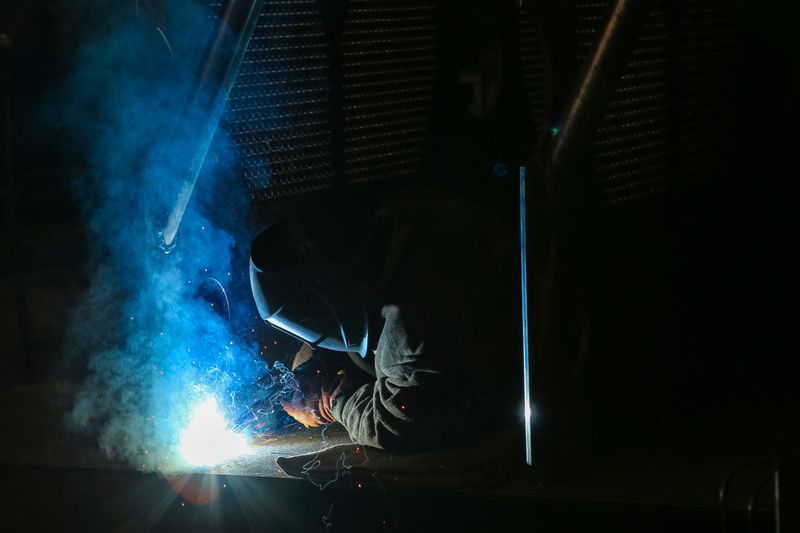
The best flux-core welder depends first on your available input power and the material you need to join. A small 120V unit can cover light repair work, while thicker material and longer welds usually call for 240V capacity and a higher rated duty cycle.
This comparison matches five machines to specific use cases using published input, output, wire, and duty-cycle specifications. It does not claim hands-on testing, and it excludes prices because retailer offers change.
Quick Picks
- Best flexible home-shop pick: Hobart Handler 210MVP
- Best for light 120V repairs: Lincoln Electric Handy Core
- Best professional multi-process pick: Lincoln Electric Power MIG 215 MPi
- Best low-cost step up: Forney Easy Weld 299 125FC
- Best high-output multi-process pick: Everlast PowerMTS 251Si
Flux-Core vs. MIG: When to Choose FCAW
Flux-core welding is a variant of wire welding where the flux is inside the wire rather than supplied by an external shielding gas (in the gasless / self-shielded variant). Key advantages:
- No gas required: Self-shielded FCAW works outdoors in wind without coverage problems.
- Higher deposition rate: Flux-core wire lays down more metal per hour than solid MIG wire.
- Better penetration on thick steel: Flux-core handles 3/16” to 1/2”+ steel more easily than 120V MIG.
- Tolerates surface contamination: Welds better on mill scale, light rust, and paint than bare MIG.
The trade-off is more spatter, heavier slag to chip, and less clean results on thin sheet metal. For indoor cosmetic work or thin-gauge metal, solid MIG wire with gas generally wins. For everything else, flux-core earns its place.
What to Look for in a Flux-Core Welder
Amperage range: Gasless flux-core wire (E71T-11) typically runs 30–200 amps depending on wire diameter. For light-duty home use, 90–140 amps on 120V is adequate. For 1/4” and thicker steel, you need 180+ amps and a 240V machine.
Wire diameter compatibility: Most machines accept 0.030” and 0.035” flux-core wire. Heavier-duty machines also run 0.045”. Match wire diameter to material thickness — 0.030” for up to 3/16”, 0.035” for 3/16” to 1/2”.
Duty cycle: More important for flux-core than MIG because you tend to run longer continuous beads. Look for at least 30% at rated output. Production users should target 60%+.
Drive roll compatibility: Flux-core wire is softer than solid wire and needs knurled (serrated) drive rolls to feed without slipping. Most dedicated FCAW machines come configured correctly; confirm before buying if it is a combination MIG/FCAW unit.
Polarity: Flux-core polarity is wire-specific. Many common E71T-11 self-shielded wires run DC electrode negative (DCEN), while gas-shielded FCAW commonly runs DCEP and exceptions exist. Verify the product data sheet, then use the flux-core welding polarity guide to connect the gun and work lead correctly.
Top Flux-Core Welders for 2026
1. Lincoln Electric Handy Core — Best for Light Repairs
Published specs: 115V input | 35–88A output | 70A at 20% rated duty cycle | 46 lbs
The Lincoln Electric Handy Core is a dedicated self-shielded FCAW machine for mild steel from 18 gauge through the manufacturer’s stated 1/8-inch maximum. Four tapped output ranges simplify setup, but the low duty cycle and maximum output make it a light-repair machine rather than a thick-material or production choice.
Best for: Occasional household and hobby repairs when you only have 115V power and do not need gas-shielded MIG.
2. Hobart Handler 210MVP — Best Flexible Home-Shop Pick
Published specs: 115/230V input | 25–210A output | 150A at 30% on 230V | 79 lbs
The Hobart Handler 210MVP combines dual-voltage input with a drive roll that includes a flux-cored-wire groove and an accessible polarity changeover. Hobart rates it for 24-gauge through 3/8-inch mild steel, depending on process, input power, wire, joint, and technique.
Best for: A home or farm shop that needs 115V portability but can use 230V for higher output.
3. Lincoln Electric Power MIG 215 MPi — Best Multi-Process Pick
Published specs: 120/230V input | 20–220A output | 215A at 30% rated duty cycle | 48 lbs
The Power MIG 215 MPi supports FCAW, steel and stainless MIG, spool-gun aluminum MIG, stick, and DC TIG. It includes a 3.5-inch color display and uses an input adapter to change between 120V and 230V; it is not an auto-sensing plug.
Best for: A fabricator who wants flux-core capability in one portable machine that also covers several other processes.
4. Forney Easy Weld 299 125FC — Simple 120V Option
Published specs: 120V input | 125A rated output | up to .030-inch wire | 42.85 lbs
Forney’s available specification sheet describes the 299 125FC as a dedicated flux-core machine for up to .030-inch wire and up to 1/4-inch plate. The sheet does not publish a rated duty cycle, and current availability may vary, so confirm the manual and support terms for the exact unit offered.
Best for: Occasional 120V repair work when a seller can provide the current manual, warranty, and replacement-part support.
5. Everlast PowerMTS 251Si — Best High-Output Pick
Published specs: 120/240V input | 30–250A MIG/FCAW range on 240V | 200A at 60% rated duty cycle on 240V | 70 lbs
The Everlast PowerMTS 251Si is a multi-process MIG/FCAW, DC TIG, and stick machine with four driven rolls, pulse functions, and a full-size spool compartment. Its highest output requires the correct 240V branch circuit; output and duty cycle are lower on 120V.
Best for: Longer, higher-output work when a dual-voltage multi-process machine fits the shop better than a dedicated industrial feeder.
Flux-Core Welder Comparison Chart
| Model | Input | Published output or rating | Best fit |
|---|---|---|---|
| Lincoln Handy Core | 115V | 35–88A; 70A at 20% | Light repairs |
| Hobart Handler 210MVP | 115/230V | 25–210A; 150A at 30% on 230V | Flexible home shop |
| Lincoln Power MIG 215 MPi | 120/230V | 20–220A; 215A at 30% | Multi-process work |
| Forney Easy Weld 299 125FC | 120V | 125A; duty cycle not listed on available spec sheet | Occasional FCAW |
| Everlast PowerMTS 251Si | 120/240V | 30–250A MIG; 200A at 60% on 240V | Higher-output work |
Essential Accessories for Flux-Core Welding
Flux-core welding produces slag and spatter, so plan for the complete setup:
- Wire that matches the machine, base metal, and procedure: Confirm classification, diameter, polarity, and whether shielding gas is required.
- The correct drive roll and contact tip: Tubular wire can deform when drive pressure or roll selection is wrong.
- Slag-removal tools: Use a chipping hammer and suitable wire brush between passes where the procedure requires it.
- PPE and ventilation: Wear an appropriate helmet, gloves, protective clothing, and respiratory protection or local exhaust as the hazard assessment requires.
- An adequate branch circuit: Follow the machine manual and applicable electrical requirements; do not select a machine only by the receptacle shape.
Which Flux-Core Welder Should You Buy?
The right machine depends on your power supply and the material thickness you weld most often:
- 120V dedicated FCAW with a higher published output: Forney Easy Weld 299 125FC — only after confirming current availability, manual, and support.
- 120V, light-gauge repairs: Lincoln Electric Handy Core — a simple dedicated FCAW setup for mild steel up to the manufacturer’s stated 1/8-inch range.
- Access to 230V, need versatility: Hobart Handler 210MVP — the dual-voltage plug is one of the most practical features in a home-shop welder.
- Higher-output work on 240V: Everlast PowerMTS 251Si — the published 200A at 60% rating supports longer work periods than the light-duty picks.
- Several processes in one portable machine: Lincoln Power MIG 215 MPi — compare its FCAW, MIG, stick, and DC TIG package with your actual work.
Before buying, download the current manual and check the rated output at your available voltage, required branch circuit, duty cycle at the output you will use, supported wire classifications, polarity changeover, replacement-gun and consumable availability, and warranty terms.
Manufacturer Specifications Reviewed
- Lincoln Electric Handy Core specification sheet
- Hobart Handler 210MVP product specifications
- Lincoln Electric Power MIG 215 MPi specification sheet
- Forney Easy Weld 299 125FC specification sheet
- Everlast PowerMTS 251Si operator’s manual
Before choosing a machine, compare flux-cored wire vs. solid MIG wire and review the site’s welding safety essentials. If you are still deciding between processes, the MIG vs. TIG vs. stick comparison explains where each fits.

The Welder's Guide Editorial Team
Independent trade-focused editorial team